
There is no single cruise line that is best for every family. A toddler who needs predictable naps, a seven-year-old who loves water attractions, and a teenager hoping for independence have different requirements. The most suitable line is the one whose specific ship, youth program, cabin setup, and schedule support your children's ages and your family's preferred pace.
Begin with the youngest traveler
A ship full of spectacular attractions may be a poor fit if the youngest child cannot use most of them. Check age and height requirements for pools, slides, climbing areas, and supervised programs. Some splash areas have separate policies for children who are not toilet trained. A brochure image rarely explains those restrictions.
For babies and toddlers, ask whether there is a nursery, what minimum ages apply, whether care costs extra, and whether reservation spaces are limited. Consider access to cribs, high chairs, bottle-warming assistance where offered, and the practical ability to return to the cabin during the day. Ships with many family amenities are not necessarily equally prepared for infants.
For older children, flexibility and age-appropriate independence become important. A twelve-year-old may want activities apart from younger siblings, while a teenager may care more about social opportunities, sports, and a space where peers gather naturally. Check the age bands rather than assuming “kids' club” covers everyone.
Study the youth program rather than the marketing slogan
Cruise youth clubs differ by age group, operating hours, staffing arrangements, activities, and sign-in rules. Some programs accept children throughout the day; others operate only during specified sessions or charge for certain evening supervision. Activities may change with the number and ages of children on board.
Ask whether siblings in different age bands can participate together and whether children can independently sign themselves in or out at particular ages. Registering a child does not always guarantee a spot in every special activity. Look at the exact sailing's timetable when available, particularly during port days or late evenings.
A family-friendly vessel should also be assessed using comparing cruise lines beyond their headline attractions, including dining flexibility and cabin practicality.
A good program should be enjoyable for the child and clear for the parent. Explain the plan to your children ahead of time, and allow time to try an activity without pressure. Some children love structured group games; others prefer a pool afternoon with their family.
Match the ship to the family's energy level
Large resort-style ships can offer waterparks, sports courts, themed venues, performances, and numerous casual dining options. They work well for families who like choice and do not mind navigating a busy property. Multiple attractions are useful when siblings want different activities.
Smaller ships may provide a calmer setting and shorter walking distances, which can appeal to families with young children or grandparents. However, specialized youth facilities may be limited or absent. A quiet ship can be ideal for a family that prioritizes scenery and shared time rather than nonstop entertainment.
Mid-sized ships can balance these priorities. Always inspect the named vessel rather than relying on the cruise line's flagship images. A fleet may contain older ships without the newest attractions and newer ships with entirely different entertainment districts.
Cabin layouts become more important with children
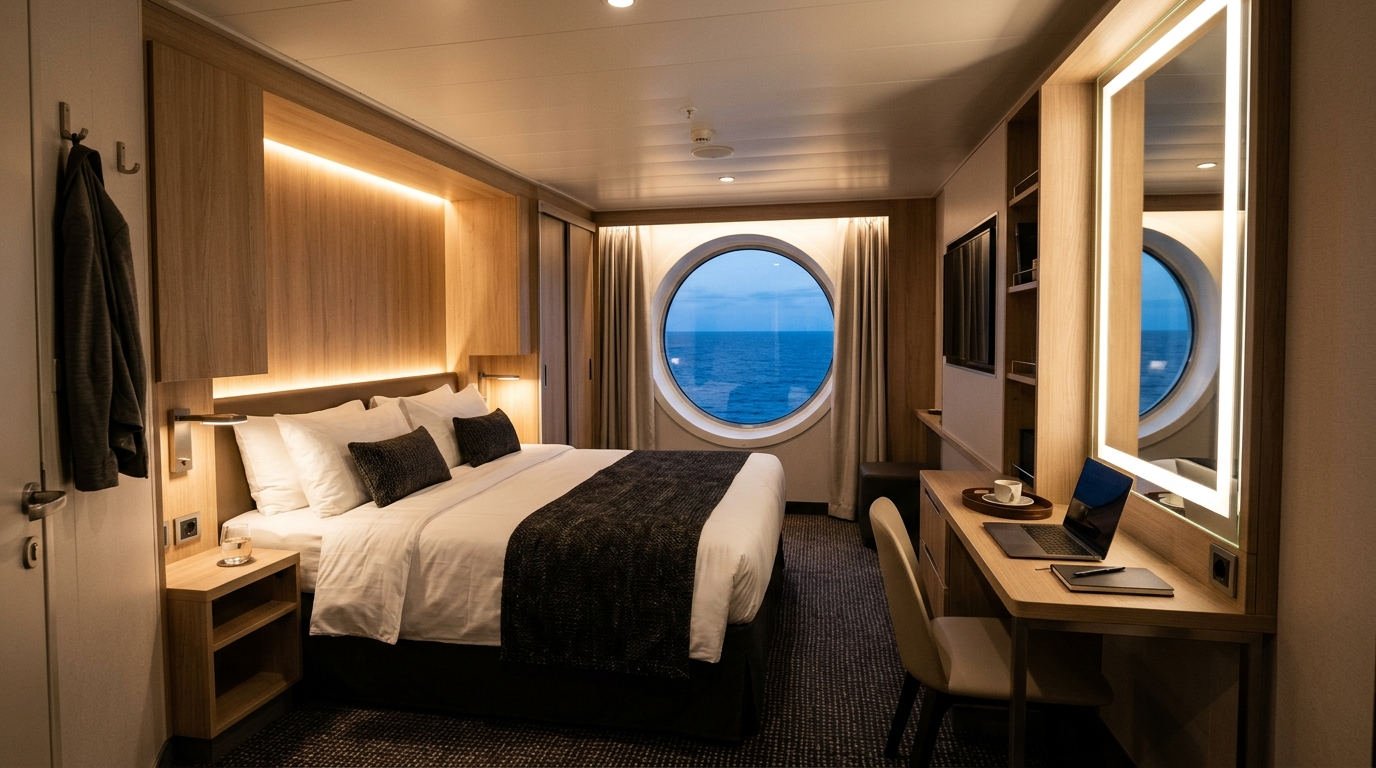
Four people in one cabin can save money but may create bedtime challenges. Compare sofa beds, upper bunks, connecting rooms, family suites, and cabins with separate sleeping areas. Ask whether the beds remain open all day or are folded away, and whether they block movement to the bathroom.
Connecting cabins can help larger families, but availability and rules vary. The total cost may be different from one large suite. If traveling with a baby, verify that the exact room allows a crib and still has practical floor space. If older children need privacy, two rooms or a cabin with genuine separation may be worth the added expense.
Check room location as carefully as size. A cabin above a late-night venue can make children's sleep difficult. Being near the children's club is convenient, but not if the corridor is constantly busy. Look at the decks above and below before selecting a number.
Meals and snacks can make or break the rhythm
A child who eats at unpredictable times needs easy, reliable alternatives. Research buffet opening hours, quick-service counters, room service charges, and children's menus in included restaurants. Flexible dining may be more convenient than fixed seating for some families, while others enjoy the routine of the same table every evening.
For allergies or restrictive diets, notify the operator in advance and follow its onboard process. Do not rely on a general claim that family cruises can handle every dietary requirement. Ask how meals are prepared and where staff can confirm ingredients.
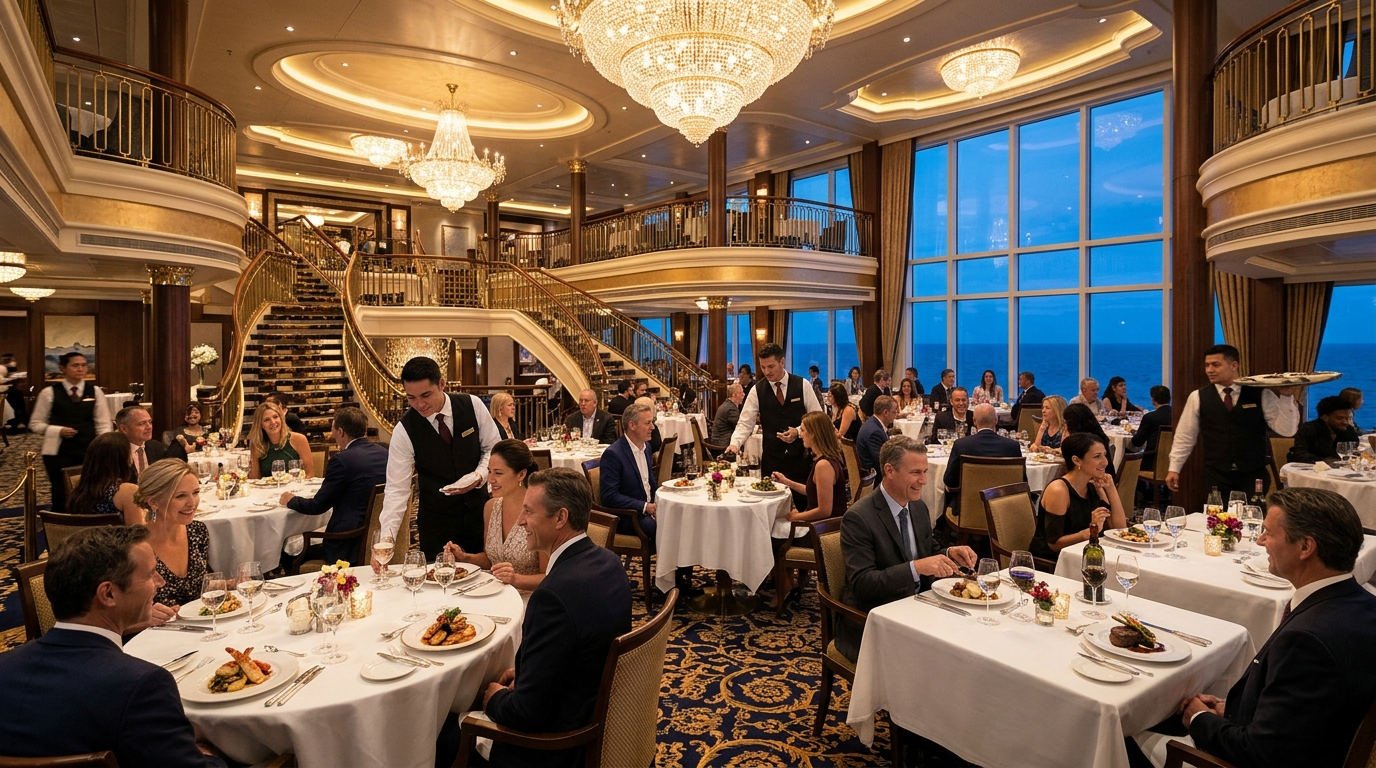
Long formal dinners are not everyone's idea of a relaxing vacation with young children. A ship with multiple casual choices can reduce pressure, but additional restaurants sometimes cost extra. Include those expenses in the comparison before treating the dining variety as free.
Plan port days through children's eyes
A full-day excursion may sound exciting to adults and exhausting to a six-year-old. Look for realistic transfer times, bathroom stops, shade, food availability, and opportunities for a break. Beach visits can be simple but require attention to sea conditions, sun protection, and return transport.
Check whether excursions accept children of the relevant age and whether car seats or suitable transport are available. In tender ports, boarding and waiting times can make the day longer. Families should generally leave a generous buffer before the ship's return deadline.
Private destinations operated by cruise companies may offer convenient beach facilities, but not every activity is included. Read descriptions of waterparks, cabanas, food, and transport before assuming a private island day is entirely free.
The adult vacation still matters
Parents often focus so much on the children that they forget their own comfort. Choose a ship with restaurants, lounges, or activities that adults genuinely want to use. Confirm whether supervised care hours align with evening plans and whether any adults-only venue has a surcharge.
Multigenerational travel adds another layer. Grandparents may need shorter walking distances or accessible facilities, while teenagers want freedom. A vessel with easily understood meeting points and diverse activities can help everyone enjoy the same trip without staying together all day.
Agree on family rules in advance, especially for older children: meeting times, spending limits, communication, and where independent wandering is permitted. Shipboard messaging systems and internet access vary, so verify how your family will stay in contact.
Compare budgets with a family lens
Start with the full cabin price for the actual number of travelers. Some promotions advertise reduced fares for additional guests, but taxes, fees, gratuities, and cabin availability can alter the cost. A lower per-person fare does not always mean the cheaper family vacation.
Add youth-program extras, specialty meals, excursions, transport, internet, and drinks. Consider the cost of pre-cruise hotel nights if your departure port requires a flight. A more convenient home port might save money and stress even when the cruise ticket is slightly higher.
Choose the line only after choosing the ship
Shortlist actual ships sailing at suitable dates, then verify youth programming, cabin configuration, and the facilities your children can truly use. Read several recent family reviews for that vessel and route. A family with a toddler may prioritize a quiet cabin, splash area, and flexible food; a family with teens may prioritize sports, shows, and supervised social spaces.
The most memorable family cruise is not necessarily the one with the longest attraction list. It is the one where children have enough to enjoy, adults can relax, and the everyday details—sleep, food, movement, and time ashore—work without constant improvisation.
Look closely at the age of each child
A ship with an impressive waterpark might be poorly suited to a toddler who is not eligible to use its attractions, while an older child might enjoy it for hours. Check minimum ages, height requirements, swimming rules and supervision policies before taking the marketing images at face value. Youth clubs may divide children into narrow age bands, so siblings might attend separate programs. Ask whether children can move between groups and whether activities operate at convenient times.
Cabin arrangements can make or break family comfort. A four-person room may involve a pull-down berth or convertible sofa, leaving little space for luggage after bedtime. Connecting cabins offer separation but can cost more and may have restrictions on which adults must be booked in each room. If you need a crib, bottle-warming arrangement or specific bedding, confirm availability before payment rather than assuming it can be requested onboard.
Families often need flexibility at meals. Consider whether early dining times are available, what casual food is served during late afternoons, and how easily a child can leave a restaurant without disrupting a lengthy service. On a port-intensive itinerary, a predictable breakfast venue and practical excursion meeting points may be more valuable than a long list of onboard attractions.
Remember the adults, too. A voyage works better when caregivers can enjoy some downtime and children have activities they genuinely like. Check supervision rules, additional evening childcare charges if any, and the process for contacting parents. A ship should support how your family spends time together and apart—not create a calendar that everyone feels pressured to follow.
Match the ship to your children’s ages
- Verify minimum sailing ages and the age brackets for childcare and youth clubs.
- Confirm cabins that can legally accommodate everyone in your party.
- Check pool, dining and entertainment availability on the actual ship rather than the fleet.