Solo cruising offers the freedom to set your own pace, but pricing can be confusing. Many standard cabins are sold on the assumption that two people will occupy them, which can make a room expensive for one guest. Some ships provide dedicated solo staterooms or reduced single supplements. The best deal depends on total fare, cabin quality, and how you prefer to travel—not simply on the word “solo” in a promotion.
Understand the single supplement first
A cruise price advertised “per person” is frequently based on two guests sharing a cabin. When one person occupies it, the line may charge a single supplement to recover some of the expected revenue from the unoccupied second berth. The supplement can vary by cruise line, sailing, room category, and current demand.
A 100% single supplement generally means paying an additional amount equivalent to the base double-occupancy fare component, though fees and charges may be treated differently. Do not assume the resulting total is precisely twice the advertised figure; request a complete solo quote. Taxes, port expenses, gratuities, and promotions can be calculated using different rules.
The key comparison is the final price for one person in the cabin, not the percentage of supplement alone. A high nominal supplement on an inexpensive sailing might still be cheaper than a reduced supplement on a premium itinerary.
Dedicated solo cabins: advantages and limitations
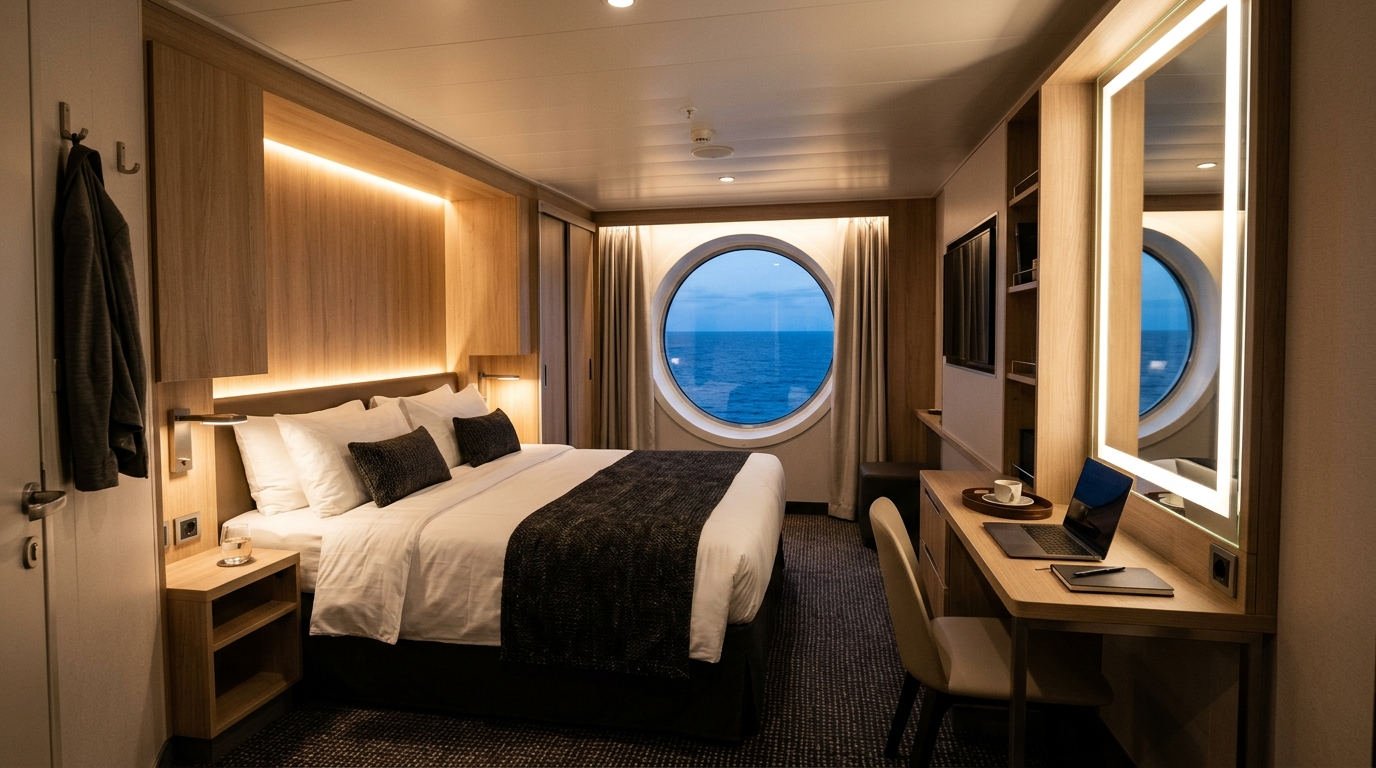
Some ships offer rooms designed for one person, sometimes grouped near a shared lounge. This can provide a practical footprint and a social setting without paying for unused beds. But a dedicated solo cabin is not automatically cheaper than a discounted standard cabin, and availability may be very limited.
Check the room's square footage, window configuration, storage, desk space, bathroom arrangement, and deck location. Some solo cabins are inside; others provide a view. A cabin close to a social lounge may be convenient but could be noisier depending on the area and schedule.
Solo pricing becomes more meaningful when placed within a broader cruise-line comparison, including service style and itinerary.
Special lounges reserved for solo guests can be helpful for meeting others, yet their access policies and hours vary. Decide whether you would use the lounge enough to value it. A solo traveler seeking privacy might prefer a conventional cabin in a quiet area even when the price is similar.
When a standard double cabin makes sense
If the total solo rate for a double-occupancy cabin is competitive, extra space can be a meaningful benefit. You may enjoy more storage, a sofa, or the option of a balcony. The cabin might also be located in a more convenient part of the ship than the available dedicated solo rooms.
Look for reduced-supplement promotions and off-peak departures, but examine the booking terms. Rates and inventory change, and a deal may apply only to selected categories or nonrefundable deposits. A standard cabin may be the better option if it costs little more and substantially improves comfort.
Evaluate sleep and daily routine. If you want to spend long afternoons reading in the cabin, additional room can matter. If you expect to use the ship's public spaces most of the day, a compact dedicated solo room may be entirely adequate.
Compare offers on an equal basis
Request the full price for one adult for the same itinerary and dates. Include taxes and port expenses, expected gratuities, internet, drinks, specialty dining, and shore excursions. Consider travel to the departure port, transfers, insurance, and any hotel nights before embarkation.
Check the cancellation schedule and the exact deposit requirements. Solo rates offered during promotional periods can have restrictions, and cabin assignments may be uncertain. If the fare is a guaranteed category rather than an assigned room, make sure you are comfortable with the possible locations.
Do not overvalue a complimentary perk. An included beverage package is meaningful only if it replaces something you planned to buy. A solo lounge is useful only if you want its social atmosphere. A cheaper cruise that forces you into a cabin you dislike may not be the best value.
Dining independently without feeling awkward
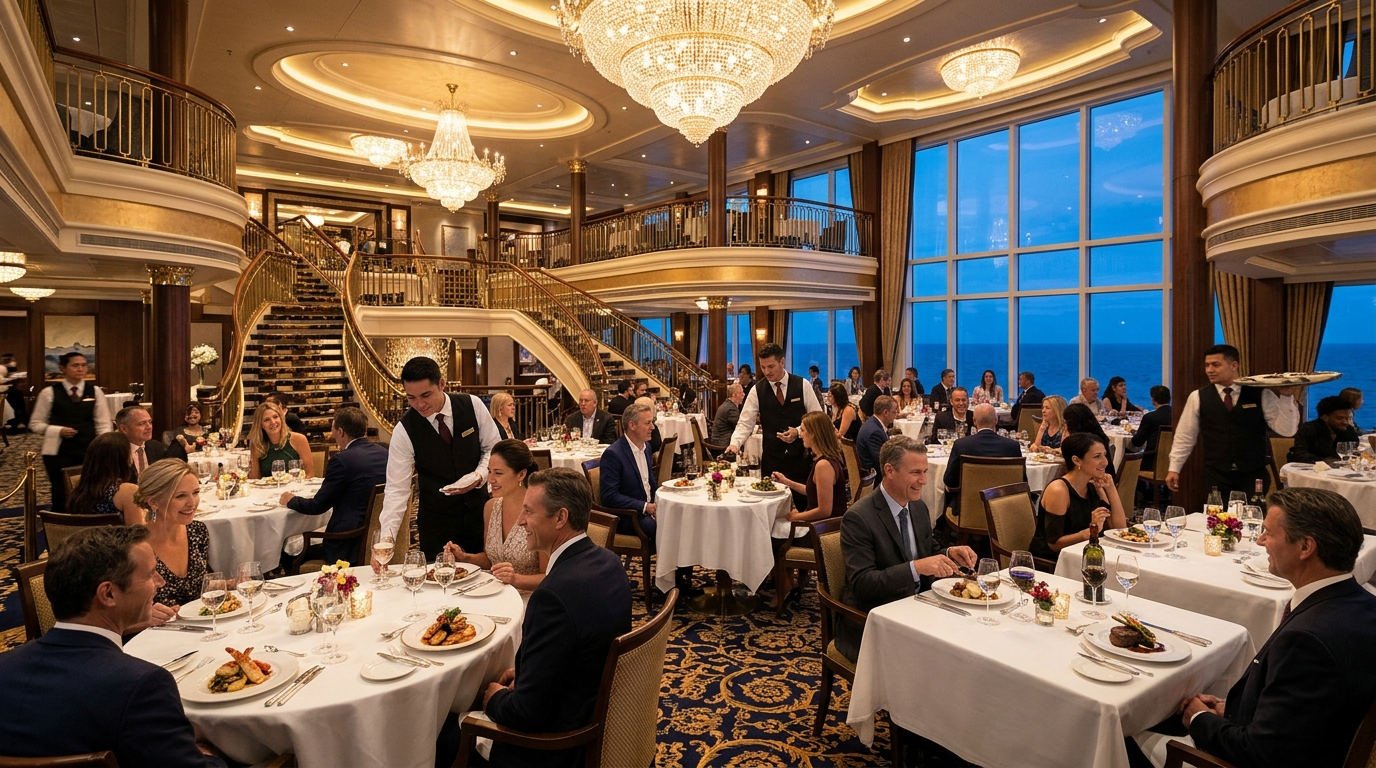
Dining arrangements can greatly influence solo comfort. Some travelers enjoy large shared tables and meeting new people; others prefer a table for one and the flexibility to come and go. Find out whether the line offers solo-hosted dinners, flexible seating, or casual alternatives.
A specialty restaurant may feel like a treat for one, but reservations can be popular. Check whether the ship has inviting counter seats, cafés, and lounges where eating alone feels natural. There is no obligation to socialize simply because you are traveling without a companion.
If the cruise includes long sea days, investigate enrichment talks, small-group classes, walking clubs, or other activities you might enjoy. Structured events can provide easy opportunities to meet people without requiring constant conversation.
Safety and independence in port
Research the destination and transport arrangements as carefully as any group would. Choose shore tours that match your interests and physical comfort, and check the return-to-ship deadline. Independent exploration can be rewarding, but keep enough time for transport delays and know where the ship is berthed.
Tell a trusted contact your itinerary, keep essential documents secure, and use judgment when sharing personal details with strangers. Meeting other guests aboard can be pleasant without making them responsible for your travel decisions. If you join a tour or a social outing, clarify where the group will meet and what happens if someone wants to leave early.
Certain remote or expedition-style excursions have participation requirements, equipment restrictions, or group arrangements that may influence solo planning. Ask the operator how activities work for single travelers, especially when room sharing or equipment pairing is proposed.
Match the social atmosphere to your personality
Some lines arrange hosted solo events, while others attract independent travelers without formal programs. A ship with many shared spaces may make spontaneous conversation easy; a boutique vessel can create familiar faces through repeated encounters. Neither atmosphere suits everyone.
Consider age mix, dress expectations, entertainment style, and how crowded the ship feels during sea days. A solo traveler who loves quiet mornings might not want a high-energy weekend sailing. Another may consider the nightlife part of the appeal. Read recent reviews from people whose priorities resemble yours.
The itinerary also sets the pace. A port-heavy cruise offers exploration and early starts; a transoceanic crossing offers extended time aboard. Choose the balance you enjoy rather than expecting a ship's solo program to compensate for an unsuitable route.
A practical booking sequence
First, select a few sailings you genuinely want to take. Second, request complete solo prices for a dedicated cabin and an ordinary double-occupancy room where available. Third, inspect exact deck plans and the included amenities. Fourth, compare flexibility, onboard atmosphere, and the total travel budget.
If accessible accommodation or a particular medical arrangement is essential, verify those features directly. Dedicated solo inventory can be limited and may not include every accessible configuration. Never assume an advertisement for solo rooms addresses all individual needs.
The best solo cabin is not necessarily the smallest or the one with the lowest supplement. It is the room that supports your independence, privacy, and budget on an itinerary you would choose even if you were traveling with someone else.
Calculate what you pay for space you actually use
A dedicated solo cabin may look like the obvious choice, but availability can be limited and its price is not necessarily lower than every double-occupancy offer. Check the actual total for one traveler, including taxes, fees and any package benefits. A standard cabin offered with a reduced single supplement might provide more comfort or a better location than a small studio at a similar price.
Think about how you use the cabin. A traveler who spends most of the day ashore may value a quiet interior studio, while someone who enjoys reading privately might appreciate a larger room or window. Storage, desk space and the proximity of the cabin to busy venues can matter disproportionately when you have no companion to share practical tasks. Do not assume a solo-designated room includes a balcony or extensive amenities.
Social programs are a separate consideration. Some ships offer hosted solo gatherings or dedicated shared lounges, but their schedule and participation vary. If meeting people is important, inspect the activities available on your actual sailing and consider whether there are shared dining opportunities. A solo traveler who prefers independence may have no interest in organized groups and should not pay extra solely for one.
When comparing two offers, add the cost of reaching the departure port and any pre-cruise hotel. A low cabin price attached to an awkward flight schedule may not be a bargain for one traveler who must manage the transfers alone. Price, safety, comfort and opportunities to socialize should be weighed according to your own goals.
Arrange an easy first evening
Traveling alone can feel liberating, but the first hours onboard sometimes involve many unfamiliar routines. Check in, learn the layout, and choose a comfortable dinner plan before the ship becomes busy. If you want company, consider one scheduled social activity rather than trying to meet people everywhere. If you prefer solitude, a quiet lounge or sunset walk is a perfectly valid start.
Let someone at home know your broad itinerary and how to contact you through the operator in an emergency. Keep documents and essential medication easy to reach, and plan transport between ports and airports with the same care you give the cabin. Good solo travel is less about proving independence than making the practical arrangements that allow it to feel easy.
Calculate the real solo fare
- Compare a dedicated studio with a standard cabin priced for one passenger.
- Check whether taxes, gratuities and any solo lounge privileges differ.
- Confirm whether the displayed fare already contains a single-occupancy supplement.