
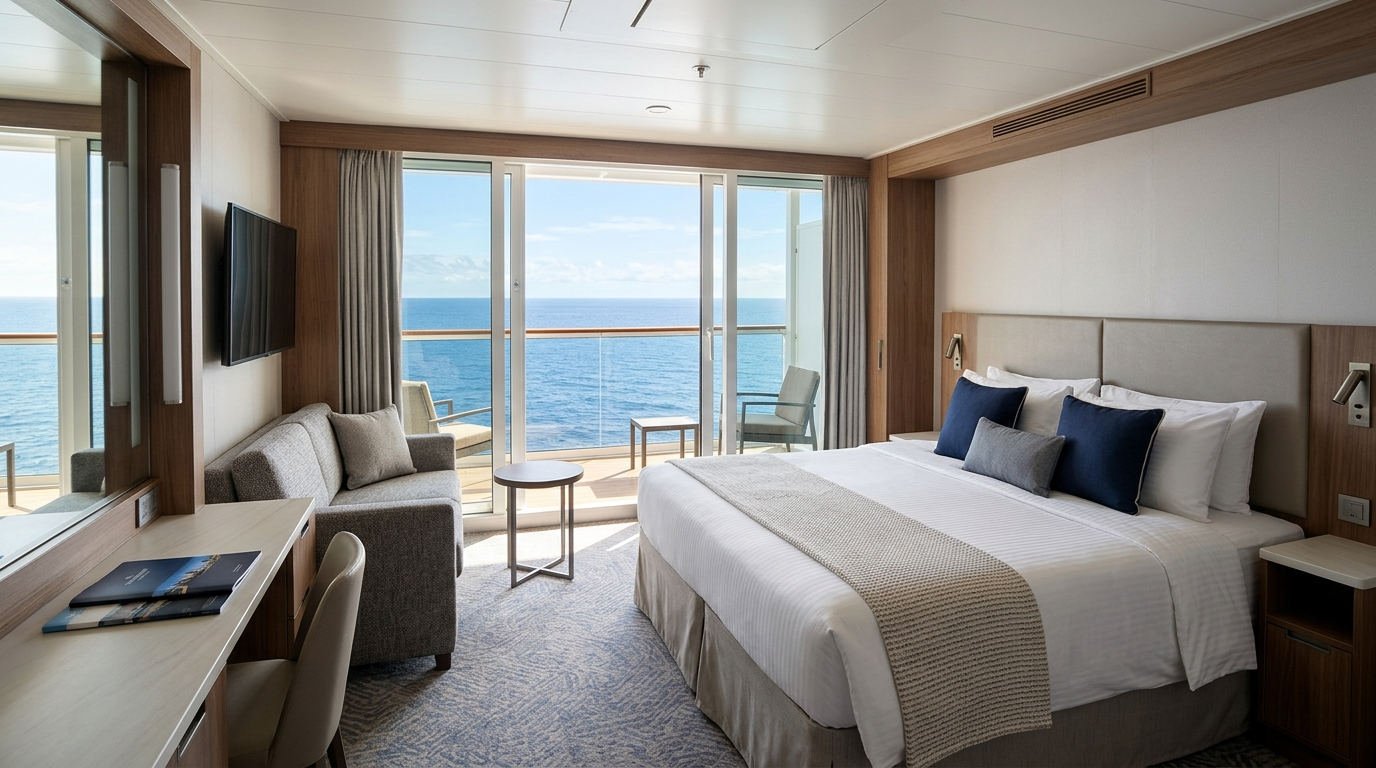
A cabin category changes both the price of a cruise and the way you experience time aboard. An inside room can be excellent value for someone who lives in the public areas; a balcony can feel essential to someone who wants quiet outdoor time. Suites add space and sometimes services, but their benefits vary widely by ship. The right question is not which category is best, but which features you will genuinely use.
Start with how much time you will spend in the room
If your days are full of excursions and evenings run late, the cabin may function mainly as a place to shower and sleep. An inside stateroom can work well when it has a comfortable layout, suitable storage, and a location away from disruptive noise. The absence of daylight is a meaningful drawback for guests who rely on natural light to wake up or who feel uncomfortable in enclosed spaces.
Travelers who enjoy breakfast in private, reading between activities, or watching arrivals from the room may place more value on windows and balconies. A scenic itinerary creates additional reasons to look outside, but you can often see just as much from shared observation decks. Paying for private views is a lifestyle decision, not a requirement for appreciating the destination.
Consider the people sharing the room. Two adults who unpack neatly may be satisfied with compact accommodation; families need to examine bed configurations, bathroom access, and whether open beds obstruct the walkway. Never assume a room advertised for four adults offers four equally comfortable sleeping spaces.
Inside cabins: the value calculation
Inside cabins normally have no exterior window. Their appeal is often price, along with the possibility of choosing a location closer to the ship's center. Some feature virtual windows or screens, but these do not provide fresh air or the experience of a real ocean view. Check the actual ship's specifications and photographs.
An inside room makes the most sense when the savings allow you to enjoy experiences that matter more: better excursions, extra time away, or a sailing with an itinerary you prefer. It is less suitable if the room becomes your retreat during long sea days. Anyone sensitive to darkness should think through how they will wake comfortably without sunrise coming through the curtains.
Before you choose a category, study what to look for on a cruise ship deck plan, because the room above or below yours can change your experience.
The main pitfall is choosing the cheapest available inside cabin without checking its position. A room adjacent to a service space or beneath a busy deck may be less restful than a slightly more expensive one. A few minutes with the deck plan can protect the value you hoped to find.
Oceanview: daylight without private outdoor space
An oceanview stateroom includes a window or porthole, though the size, position, and view can differ. Some have restricted visibility because of lifeboats or ship structures. Others are close enough to the waterline that waves dominate the view. The window generally does not open; it is intended for light and scenery, not ventilation.
Oceanview rooms can offer a practical middle ground. You gain a connection to daylight and can check weather conditions from bed, yet the price may be lower than a balcony cabin. On routes where conditions make outdoor sitting less appealing, the difference between an oceanview and balcony may be smaller than expected.
Read the exact cabin description carefully. Marketing labels can group rooms with very different shapes and windows. Compare floor plans rather than only square footage; furniture arrangement, storage access, and the location of the bathroom door can make a modest room feel easier or harder to use.
Balcony: a private place for the voyage itself
A balcony adds direct outdoor access from the cabin. This is particularly attractive for people who want to watch departures, sit outside in the early morning, or enjoy a quiet moment without finding a public deck chair. It can be wonderful during scenic cruising, although the best viewing side may change as the ship turns or the route progresses.
Balconies are not always interchangeable. Some have metal railings, angled structures, partial overhead cover, or neighboring sight lines. Size and furniture differ, and some so-called balcony categories have enclosed or mechanically operated configurations. A balcony next to a noisy venue may provide less privacy than the photograph suggests.
Weather is the overlooked variable. Strong wind, rain, heat, or cold can make a balcony less usable. In cooler regions, a comfortable indoor observation room might be more valuable than outdoor square footage you use for only a few minutes at a time. In warm climates, shade and whether the balcony receives strong afternoon sun may influence comfort.
Suites: space, service or both?
A suite may offer separate sitting and sleeping areas, a larger bathroom, more storage, and additional outdoor space. Some ships attach access to private restaurants, lounges, priority services, dedicated concierge help, or other privileges. Other suites mainly provide extra room. There is no universal suite package across cruise lines or ships.
For families sharing accommodation, genuine separation between beds can justify a higher fare. For travelers who work remotely, need quiet indoor space, or value private dining, a suite's layout may matter more than its status. Check whether promised benefits apply to every suite category or only to a premium tier.
Examine what the suite replaces in your budget. If a suite means giving up an itinerary you would love, the extra room might not be worthwhile. Conversely, a longer cruise with multiple sea days may make a spacious room more rewarding than on a short trip packed with port visits.
Location can outweigh category
Every cabin exists within a ship's working environment. Rooms near nightclubs, theaters, galleys, gyms, pool decks, or crew-access doors may experience more noise or activity. Cabins at the front or rear may have distinctive views but could involve longer walks or a different sensation of motion. Central, lower locations are often favored by passengers concerned about movement, but suitability depends on the vessel and conditions.
Check the deck above and below, then inspect where elevators, stairwells, and venues sit. Connecting doors can be helpful for families and less desirable for people prioritizing sound separation. A room directly below chairs dragged across a hard deck may be more disruptive than one near a quiet corridor.
Accessible cabins require careful planning. They can include wider doorways, roll-in showers, and turning space, but equipment and layouts vary significantly. Travelers should confirm specific dimensions and access routes with the cruise line rather than assuming every room with an accessibility symbol meets their needs.
Compare usable space, not only listed square feet
A cabin's published size may include different components depending on the operator. Clarify whether a balcony is counted separately and whether large total-area figures include outside space. Square footage does not reveal whether bedside tables fit, whether luggage can be stored, or whether the bathroom door blocks circulation.
Study real floor plans and room photographs from the exact ship. Pay attention to the distance between bed and wardrobe, the seating setup, the number of outlets, and the position of additional bunks. If you need a desk or a sleeping arrangement for more than two guests, verify it by stateroom number.
Calculate the nightly upgrade in context
Rather than comparing total fares alone, divide the additional cabin cost by the number of nights and occupants. An upgrade that sounds expensive as one lump sum may be a reasonable per-day purchase for a couple who will use it; a modest upgrade can still be wasteful if nobody intends to spend time there.
Check whether a lower category offers the same dining, entertainment, and public spaces. Many experiences are shared across cabin categories, while premium suite areas may be restricted. When you pay for a room upgrade, know exactly which benefits are included and which are simply part of being aboard.
A cabin choice for each kind of trip
For a first short cruise with full days in port, a well-located inside or oceanview cabin can keep costs manageable. For a long scenic voyage, a balcony or good oceanview may be worth considering, especially if private viewing matters. For a family needing separate sleeping zones, layout should lead the decision. For guests with mobility requirements, precise accessible features come before views or prestige.
The winning cabin is the one that lets you sleep well, move comfortably, and enjoy your preferred daily routine without paying for perks you seldom use. Once you know what matters, compare exact stateroom numbers—not just the category name on the booking screen.
Run the cabin-value test for your own itinerary
The number of nights spent at sea matters. On a scenic route with long daylight hours, a private balcony may give you a comfortable place to observe the coastline without fighting for a viewing spot. On a port-intensive trip where you leave shortly after breakfast and return at dinner, that same balcony may receive little use. A traveler who normally sleeps soundly in a dark room might be perfectly happy in an interior cabin and redirect the savings toward experiences ashore.
Compare cabins at the level of the exact deck and category. Two balcony rooms may face different directions, have different furniture, or offer partially blocked sight lines. Connecting doors, service corridors, a public pool overhead or the location of a lifeboat can matter more than a few extra square feet. If you are booking a guaranteed category, understand that cabin location may be assigned later, leaving less control over these factors.
For more than two passengers, inspect the actual sleeping arrangement. A room advertised for four might have a sofa bed or pull-down berth that changes the usable floor area when open. Families should consider where suitcases will go, whether the bathroom schedule is manageable, and how safely children can use balcony doors. Some suites offer additional bathrooms or separation, but the price premium may exceed the value of those conveniences for your group.
An accessible cabin is not just a standard room with more space. Door widths, bathroom equipment, bed clearance and emergency arrangements must meet the passenger's specific needs. Verify the layout with the operator directly and request written confirmation of relevant features. The best cabin is the one that makes daily routines easier—not the one that sounds most impressive on the booking screen.
Match the cabin to your itinerary
- Compare the complete fare difference between interior, window, balcony and suite.
- Check deck position for motion, noise and privacy rather than category alone.
- Verify any suite benefits and connecting-room arrangements for the specific sailing.