A ship can carry a great many people without feeling packed, or carry relatively few and still have a line at breakfast. Capacity influences the experience, but comfort depends on how a vessel uses its space, schedules activities, and handles movement between decks. Understanding those details helps you predict where a sailing may feel relaxed—and where patience will be necessary.
Passenger capacity is only the opening number
The number advertised for a ship is often based on double occupancy, with additional capacity possible when cabins hold third and fourth guests. That means the same vessel can feel different during a school holiday and during a less family-oriented sailing. A fully booked ship does not necessarily operate at its maximum theoretical passenger count, and marketing figures may use different definitions.
Gross tonnage measures enclosed volume, not how much the vessel weighs. Some travelers divide tonnage by passenger count to approximate space per guest, but that ratio has limitations. It says nothing about where space is located, whether a lounge has comfortable seating, or whether a waterpark occupies areas irrelevant to a guest seeking quiet.
Use capacity as a clue, then ask how the ship manages actual demand. A large ship with multiple breakfast venues and several pool areas may distribute crowds well. A mid-sized vessel with one busy elevator core can create queues during peak times. The physical layout and the operating plan matter together.
The spaces that feel crowded first
The buffet before an early shore excursion is a classic pressure point. Guests often want to eat at the same time, and a large seating area does little good if serving stations are arranged awkwardly. More useful details include alternative breakfast spots, opening hours, and whether room service is included or carries a fee.
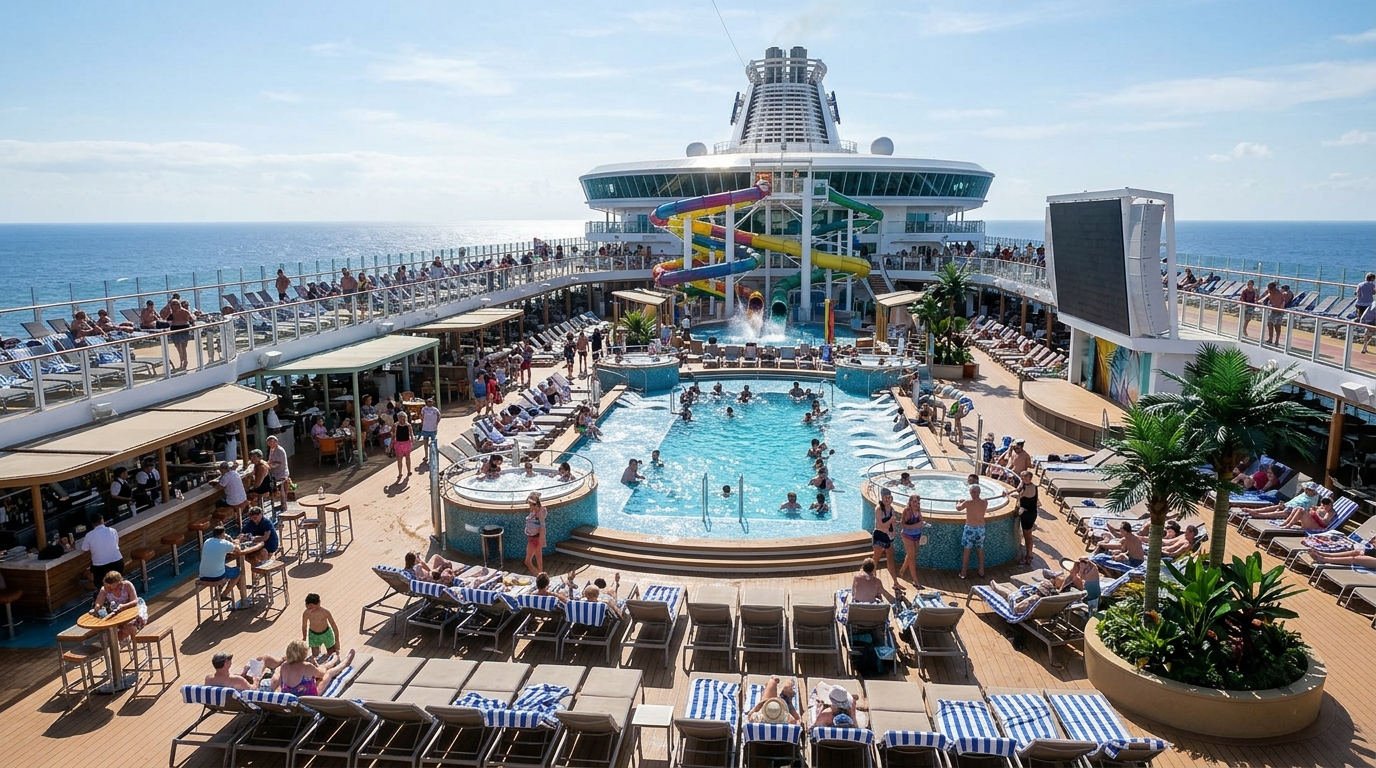
Pools and loungers are another predictable test. A photograph taken before breakfast may not show the midday competition for shaded seats. Separate adult retreats, family pools, quieter decks, and accessible routes can relieve pressure, but availability depends on the exact ship. Outdoor space that is unusable because of weather increases demand for indoor venues.
Some bottlenecks and noisy areas are visible in advance when you learn how to read the deck plan before booking.
Theater entrances, tender departure points, and terminal exits can produce concentrated crowds even on ships with ample public areas. These are usually temporary events rather than constant conditions. If being in a large group causes stress, it may help to choose quieter departure times or routes with direct-docking ports where possible.
How deck design shapes the day
On some vessels, entertainment venues cluster around a central promenade. That creates energy and convenience but can bring noise and congestion to nearby areas. Other ships separate dining, pool, and theater districts, reducing overlap but increasing the amount of walking. Neither arrangement is universally superior.
Elevator banks deserve particular attention. A ship may have numerous lifts but still experience long waits when most guests move between the same two decks. Anyone who cannot comfortably use stairs should check whether accessible routes serve all relevant facilities and whether a special lift or threshold is involved. A good cabin location can substantially reduce repeated journeys.
Wayfinding also contributes to comfort. Distinctive stairway artwork, clear deck labels, and uncomplicated corridors make a ship easier to learn. For passengers managing children or traveling with a group, the ability to navigate without constant backtracking can be as welcome as another restaurant.
Crowds behave differently on sea days
During port days, many guests leave the vessel for several hours. Sea days bring almost everyone back into shared spaces, often at the same time. Weather magnifies the difference: a pleasant day opens decks, while rain may push passengers toward lounges, dining rooms, and the atrium.
Look at the itinerary's balance of sea and port days before deciding whether a ship has enough activities or quiet corners. A port-intensive journey can make a smaller public-area selection perfectly acceptable. Several consecutive sea days make indoor seating, entertainment variety, and access to outdoor views more important.
A well-designed daily program spreads demand throughout the ship. Workshops, film screenings, fitness sessions, talks, and music can keep any single area from becoming overwhelmed. Conversely, a schedule with one dominant event may draw a crowd regardless of vessel size.
How many people can actually use an amenity?
A vessel may advertise a dramatic observation lounge, but if it contains limited seating, finding a chair during a fjord passage could be difficult. A popular spa feature may require bookings and cost extra. Specialized pools may have age restrictions, and family attractions may operate only in suitable weather.
Count availability in practical terms. How many casual dining alternatives are open at breakfast? Is there shaded outdoor seating beyond the main pool? Are indoor lounges accessible to all cabin categories, or is some space reserved for suite passengers? Are the most appealing activities included in the fare?
Marketing often highlights the existence of an amenity rather than its usable capacity. Photos and deck plans help, but reviews that mention the time of day and specific venue give more context than broad claims that a ship is “crowded” or “uncrowded.”
Port access changes the crowd equation
Large ports can welcome several ships simultaneously. Congestion then depends not only on your ship but also on the day's other arrivals, local road capacity, tendering arrangements, and how many passengers book overlapping excursions. A city may handle crowds smoothly while a small waterfront becomes busy quickly.
Tender operations deserve a separate look. Where ships anchor offshore, passengers board smaller boats to reach land. Priority systems, sea conditions, boarding points, and available vessels affect timing. Guests with limited mobility should verify specific tender policies, since safe boarding can depend on conditions on the day.
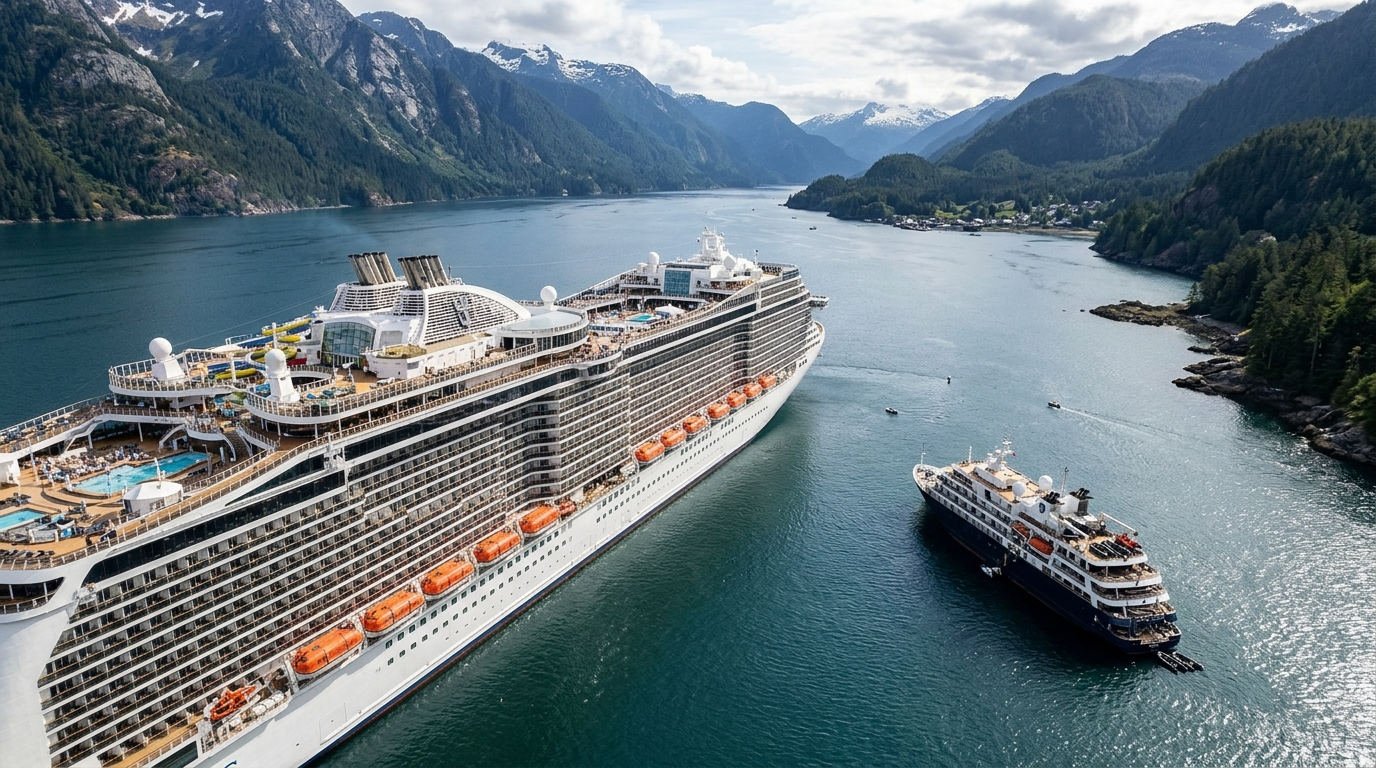
Smaller ships may access certain ports that larger ones cannot, yet that does not guarantee a quiet experience ashore. A popular destination can draw land visitors and multiple types of tours. Focus on actual port hours, walking distances, and realistic time to explore rather than assuming size automatically creates exclusivity.
Cabin placement is part of the solution
Even a busy ship can feel peaceful from a quiet stateroom in a less trafficked zone. Rooms near a central atrium, lifts, or open decks may expose guests to additional foot traffic. Cabins under fitness rooms, restaurants, or outdoor furniture can receive intermittent sound. Review adjacent decks, not just the cabin floor itself.
For travelers who need easy movement, being close to an elevator can be helpful, but avoid locations where people congregate outside the door. A midship position may shorten trips across the vessel. Families should consider proximity to the children's program and dining areas without sacrificing reasonable quiet at bedtime.
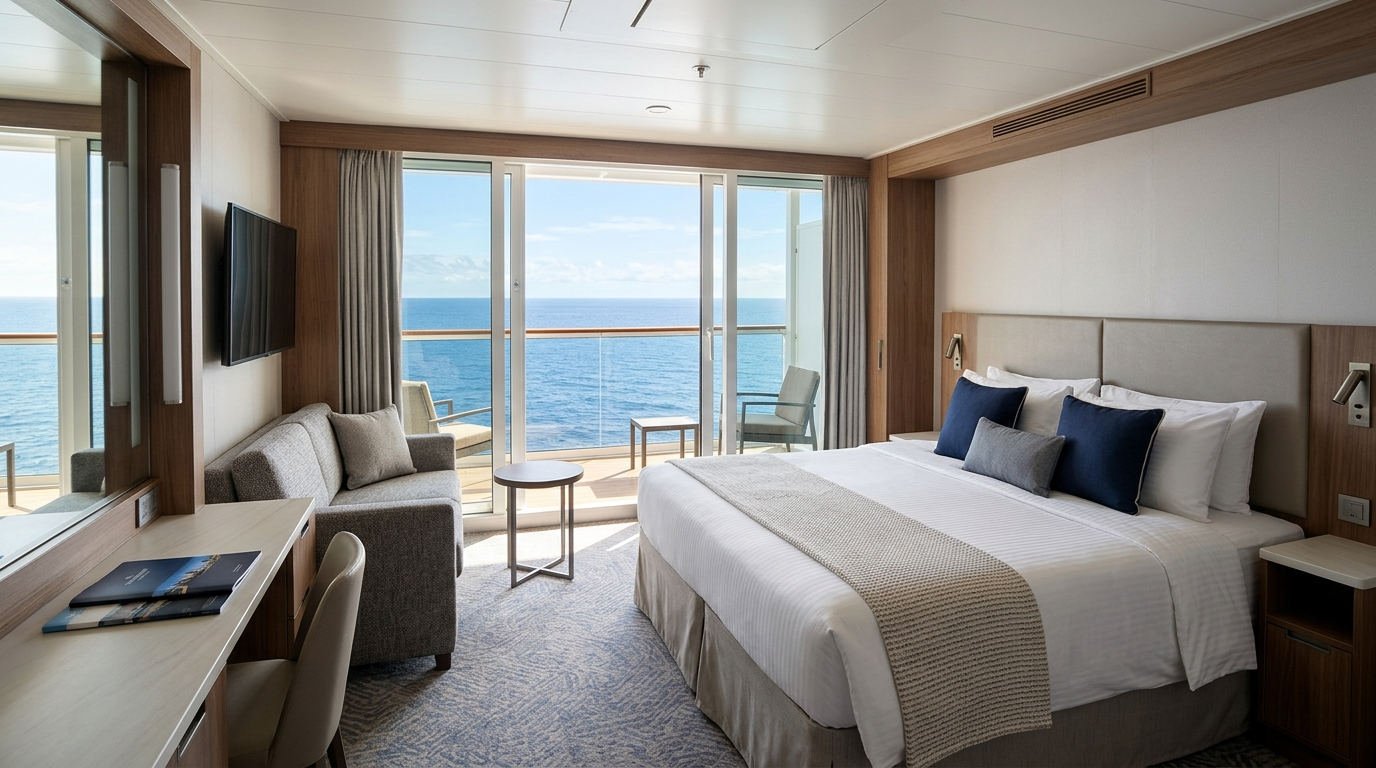
A private balcony can reduce dependence on shared outdoor seating, but it is not the only solution. Some lower-priced cabins sit close to uncrowded observation areas. Understanding the ship's circulation is often better value than buying a category upgrade without checking location.
Comfort includes sensory and social factors
Crowding is partly subjective. One passenger enjoys the energy of music, conversations, and families moving around a promenade. Another needs visual calm and predictable places to sit. A ship's style determines which atmosphere is dominant and whether quiet alternatives are available.
Look for clues about lighting, amplified music, smoking areas, and evening programming. A bustling atrium may be exciting for a short visit and tiring if it is the only practical route to your cabin. Smaller vessels sometimes provide a calmer social atmosphere but can also offer less privacy when the same guests meet repeatedly.
Traveling with children changes the equation. Busy family areas can be ideal when the children want activity, provided adults have nearby seating and clear supervision rules. A child-free lounge is useful to guests seeking quiet, but it does not establish that the entire ship will be calm.
Ask better questions than “Is it crowded?”
When reading reviews, focus on evidence: the date and itinerary, whether the sailing fell during school holidays, what venue became busy, and whether queues were persistent or brief. Compare accounts from different travelers, since a parent with children and a couple seeking silence may rate the same lively deck very differently.
Before booking, check dining reservations, show seating, cabin location, and the availability of quieter alternatives. If possible, compare ship deck plans and itinerary schedules side by side. For a traveler who cannot tolerate long lines, a vessel with flexible dining and straightforward port operations may be more important than the numerical passenger count.
The most comfortable ship is not necessarily the one with the fewest passengers. It is the one where the spaces you want to use remain pleasant at the times you want to use them, and where getting around feels manageable throughout the voyage.
Watch for bottlenecks that capacity figures cannot show
Two vessels carrying similar numbers of guests can feel remarkably different when everyone wants breakfast at the same time. A dining room with several service points and multiple entrances may move people efficiently; a narrow queue near one buffet station may not. Attractions with timed reservations can spread demand, but they can also reduce spontaneity. Look for how a ship distributes activities across its decks and at different times of day.
The embarkation terminal is another variable. A ship may have efficient onboard circulation yet face queues at security, immigration or tender operations because of the port's infrastructure. Multiple elevators do not prevent congestion when large groups return from excursions at once. If avoiding crowds is especially important, choosing a longer port call and returning outside the peak period may matter as much as the ship's layout.
Public space needs to work when conditions are unfavorable. A tropical vessel may have generous outdoor pools, yet a rainy sea day sends everyone toward indoor lounges. On a cold-weather route, panoramic observation rooms and indoor seating become more valuable. Study photographs of the full ship, not only its beautiful sun deck, and ask where you could comfortably sit for an hour without needing to purchase anything.
Passengers with children, wheelchairs or reduced stamina should examine routes between the cabin, dining venues, gangways and medical center. A large ship can provide excellent accessibility in some areas while still requiring long journeys or having particular facilities that are difficult to reach. Comfort means different things to different people. A practical deck-plan walk-through is often a better predictor than any single statistic.
Look beyond a ship’s guest count
- Compare passenger numbers with available dining, pool and entertainment venues.
- Check walking distances between your intended cabin and frequently used facilities.
- Look at the itinerary for ports where a larger vessel may need a tender or alternative berth.