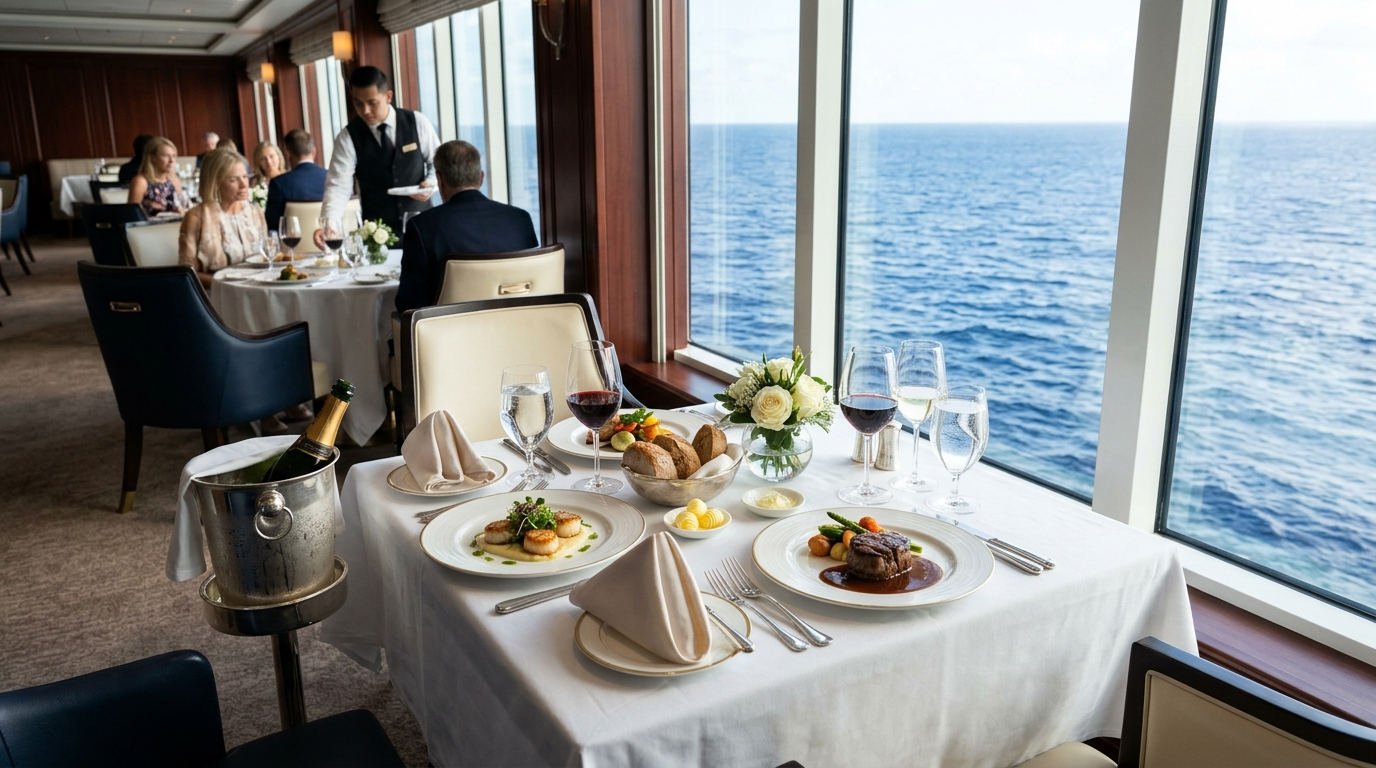

A sea day is a day when the ship is traveling without a scheduled port visit. It can be a favorite part of a cruise because there is no urgent excursion departure and the ship itself becomes the destination. The day is not necessarily idle, however. Dining, shows, classes, pools, and lounges create plenty of options, and busy areas may feel different when most passengers remain aboard.
A morning without a port deadline
On a port day, breakfast can revolve around a scheduled meeting time. A sea day allows a slower start. Some guests order breakfast to the cabin, while others visit a café, buffet, or main dining room. Opening hours and any room-service charges depend on the ship and fare.
Early risers may find outdoor decks unusually peaceful. Walking along a promenade or watching the horizon can be a simple pleasure before popular venues fill. If exercise is part of your routine, check the fitness center's opening hours and whether scheduled classes require reservations or fees.
Families might prefer breakfast before the pool area becomes busy, while couples may enjoy a long meal with no destination timetable. There is no requirement to attend the ship's first organized activity. A sea day often feels best when you decide which parts to keep unstructured.
The daily program is a menu, not an assignment
Cruise ships typically provide a printed or digital schedule with activities, entertainment, dining times, and announcements. The list may include trivia, dance lessons, enrichment talks, demonstrations, fitness sessions, games, and family programs. The variety depends heavily on ship size and the operator's style.
Choose a few things that genuinely interest you. A packed schedule can reproduce the stress you hoped to escape. It is perfectly reasonable to spend an hour reading or watching the sea while a dozen activities happen elsewhere on the vessel.
If you want to build an enjoyable evening into your sea day, the different kinds of onboard entertainment outlines the choices and reservation rules.
Some events require reservations or cost extra. A popular cooking class, spa treatment, or specialty activity may have limited capacity, so check early when it matters to you. Other events can be joined spontaneously. Understanding the difference prevents disappointment without turning the day into a military timetable.
Pools and sun decks are often busiest
With no large group going ashore, outdoor leisure areas can fill quickly when the weather is favorable. Loungers, shaded seats, and pools may be popular throughout the middle of the day. The ship's policies about reserving empty loungers and using towels should be followed.
Look beyond the central pool. Some vessels have quieter observation decks, adult-only areas, covered promenades, or indoor lounges with sea views. A crowded pool does not mean the whole ship is crowded. Finding a favorite place away from the main activity zone can transform a sea day.
Weather changes the equation. Rain or wind can reduce usable outdoor space and push passengers into cafés, atriums, and entertainment venues. On cooler routes, sheltered observation lounges and generous indoor seating may matter more than pools or water attractions.
Lunch can be casual or leisurely
A sea day offers time to explore dining choices beyond the quickest buffet. Some ships open the main dining room for lunch or offer casual restaurants, snack counters, or specialty venues. Check which are included and whether there are reservation requirements.
This is also a good day to learn which venues suit your preferences. A quiet café may be ideal for a light meal, while a family may appreciate a straightforward buffet with flexible choices. Dietary needs should be addressed through the line's official process rather than assumed from buffet labels alone.
Food can become an activity in itself, but it does not need to dominate the day. Pace meals comfortably, stay hydrated, and avoid feeling obliged to sample everything because it is included in the fare.
Afternoon choices depend on the ship's character
On a large resort-style ship, the afternoon may bring water attractions, sports facilities, theater rehearsals, cinema, and structured games. Smaller ships may emphasize destination lectures, music, reading lounges, or conversation. Expedition ships can use sea days for specialist briefings and observation.
A spa appointment or quiet hour in the cabin can be appealing, but premium facilities may charge extra. If the weather is scenic, take time to watch the coastline or open water. Some of cruising's most memorable moments happen without a named activity.
Families should check youth-program hours and sign-in policies. Sea days may include popular special sessions with limited capacity. Parents can alternate shared activities and supervised time according to the children's ages and the actual program.
Staying connected—or choosing not to
Ship Wi-Fi often uses satellite connectivity and may have service limits. Packages differ in price, speed, and devices covered. A sea day away from coastal mobile networks is a good reminder to check roaming settings before a phone connects through expensive maritime services.
Some travelers use the opportunity to disconnect deliberately. Others need to contact family or handle work messages. Download important information before the trip and choose a connectivity package that matches your needs rather than paying for a premium plan out of habit.
If staying connected is important, recognize that technical performance can vary with location and weather. Have a reasonable contingency for urgent communications instead of assuming home-level service everywhere at sea.
What a sea day feels like when the sea is rough
Movement at sea varies with conditions, route, and vessel characteristics. A larger ship is not immune to rough weather, and a modern stabilizer system cannot eliminate every sensation. Travelers who are prone to motion sickness should discuss preventive options with a qualified healthcare professional before departure.
During rougher conditions, follow crew instructions about outdoor areas and moving around the ship. Rest, hydration, and avoiding unnecessary risk matter more than completing an activity list. A quiet cabin and accessible indoor spaces can make an unsettled day easier.
If you feel ill, seek appropriate medical advice rather than assuming every symptom is ordinary seasickness. Onboard medical care may involve charges, so review relevant coverage before your voyage.
The evening has its own rhythm
As the day moves toward dinner, guests may return to cabins, dress for the evening, and gather in lounges. Some ships schedule formal or themed nights on sea days; others maintain a casual atmosphere. Check the actual dress policy rather than expecting every cruise to use the same traditions.
Theater productions, comedy, live music, and other performances often follow dinner. Reservations may be necessary for popular shows, particularly on larger vessels. On smaller ships, a concert or conversation in a lounge may be the main event. Neither approach is better unless it matches what you enjoy.
Late-night venues can stay active after the main show. If you prefer an early night, choose a room away from entertainment spaces and remember that the following day's port call may require an early start.
How to make the day your own
Pick one or two activities, identify a comfortable place to relax, and leave space for spontaneity. Families can balance scheduled programs with unhurried time together. Couples may enjoy a special meal, while solo travelers can choose between social events and a peaceful day alone.
A sea day is not wasted travel time between destinations. It is a chance to enjoy the moving view, explore the ship's personality, and experience a vacation without the constant urge to get somewhere else.
Design a sea day around one anchor activity
An open day can be surprisingly easy to overschedule. The daily program may offer fitness classes, talks, music, trivia, demonstrations and entertainment across several venues. Instead of trying to sample everything, choose one activity that matters most, then let the rest of the day remain flexible. A sea day is one of the few parts of a cruise where there is no port deadline pushing you out the door.
Morning is often a good time for a quiet deck walk or a relaxed breakfast before some public spaces become busy. Later, you could choose a lecture, book, spa visit or simple time watching the sea. The goal is not to fill every hour. If you are traveling with children or a group, agree on a meeting time and give people permission to pursue different interests.
Weather can reshape the schedule. An outdoor pool area may close or become less comfortable in wind and rain, while indoor lounges fill up. Learn where you can find daylight, seating and pleasant views under cover. On scenic routes, a broad public observation area may be more useful than a private balcony when the ship changes direction.
Sea days also provide a chance to notice how the ship works. Dining venues may offer different opening hours, and the evening program may be busier because passengers are all onboard. Review the daily guide, reserve anything that genuinely requires advance booking, and check whether special activities carry a fee. The most memorable sea day is often the one in which you enjoy having nowhere else to be.
An afternoon at sea can be the highlight
Passengers sometimes judge a cruise by its ports, yet an unhurried afternoon can become the memory they mention most. Watch the wake from a sheltered seat, share a slow lunch, or attend a talk you would never have chosen at home. Without the pressure of a return deadline, small experiences have time to register.
If you are on a first cruise, use a sea day to learn the ship rather than chase every scheduled event. Try a different public lounge, inspect a quiet outdoor deck when weather allows, and ask staff about services you may have overlooked. Confidence in the surroundings makes the rest of the voyage easier and often reveals unexpected favorites.
Design a sea day that fits you
- Locate quieter spaces, meal times and activities in the ship’s daily schedule.
- Make reservations early for popular shows or limited-capacity experiences.
- Leave unscheduled time so a day at sea does not become another rushed itinerary.