A cruise ship's evening might involve a production show, a piano bar, live music on deck, a comedian, a late film, or nothing more elaborate than watching lights move across the water. Entertainment is one of the pleasures of cruising, but the choices differ substantially from ship to ship. Knowing how schedules, reservations, age rules, and venue locations work helps you choose a voyage with the atmosphere you actually want.
The nightly program is your real guide
Cruise advertisements often feature spectacular stages and glamorous costumes. The useful question is what will be performed on your particular sailing. A company may operate many ships with different theaters, casts, technical equipment, and programming. Even the same vessel can change its lineup over time or adjust shows because of operational needs.
Look for sample daily programs to understand the broad pattern, but treat them as illustrations, not a promise. On board, activities are typically published through the ship's app, a daily guide, or screens around the vessel. Times may overlap. A short preview of the evening schedule each morning makes it easier to fit dinner around something you genuinely want to see.
Do not feel obliged to attend every headline production. Shows can become less enjoyable when the rest of your day turns into a rush between reservations. Pick a few priorities and leave room for an unplanned conversation or a quiet walk on deck.
Production shows and theatrical performances
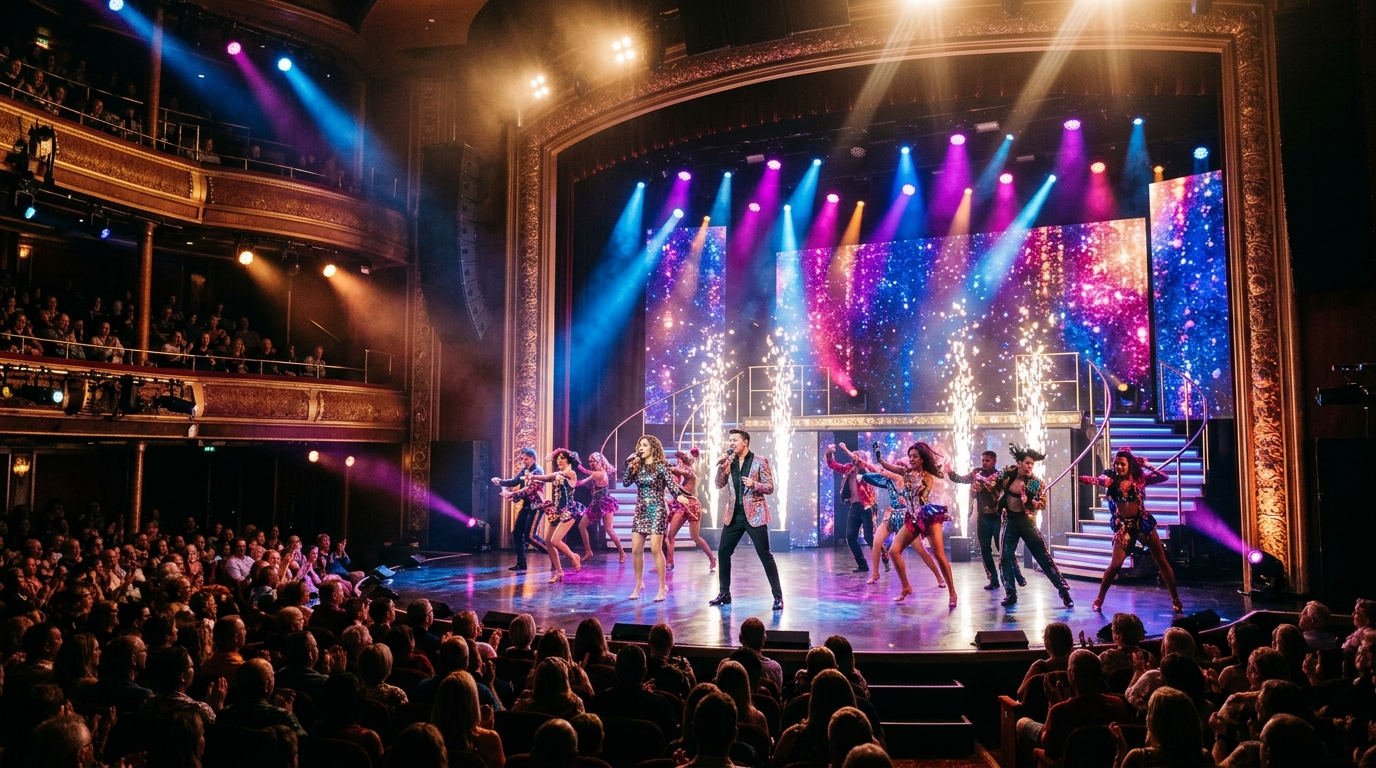
Larger ships may have purpose-built theaters with singers, dancers, lighting effects, acrobatics, or technically complex productions. Smaller vessels may rely on cabaret-style performances, guest entertainers, lectures, or more intimate live acts. Neither format is inherently superior. The best match depends on whether you enjoy polished spectacle or direct connection with performers.
Some venues require reservations, even when the performance is included in the fare. Others offer first-come, first-served seating. Check the current policy and arrive early when appropriate. A reservation might hold a space rather than assign a specific seat; accessibility arrangements may require contacting staff in advance.
Entertainment fits better into a holiday when balanced with the ordinary rhythm of a sea day and time to do very little.
Sight lines vary by location. Balcony overhangs, pillars, wheelchair seating areas, and the angle of a stage can shape the experience. For families, verify age guidance and the running time. A dramatic light show that delights adults may overwhelm a sensitive younger child.
Music creates different neighborhoods of the ship
One of the most noticeable distinctions between cruise ships is how music fills their public spaces. A lounge may feature acoustic guitar in the early evening, a piano player after dinner, and a lively band later. Another ship might emphasize dance classes, jazz, classical performances, or DJ sets.
The venue matters as much as the performer. Music in an open atrium can travel into neighboring decks, while a purpose-built club may contain its sound more effectively. If you prefer quiet conversations, choose a ship with varied lounges and check cabin locations near late-night entertainment areas.
For passengers who love dancing, ask whether there is an actual dance floor and whether music continues late. Promotional photographs of a dance party are not evidence that the same experience happens every night. Sailing length, passenger demographics, and special events all affect the atmosphere.
Comedy, games and audience participation
Comedy clubs, trivia, game shows, karaoke, quizzes, and themed parties often sit alongside larger headline events. Some are relaxed spectator experiences; others invite passengers to participate. If you dislike being singled out in a crowd, choose a seat and venue accordingly.
Comedian performances can be divided into family-friendly and adults-only sessions with different material. Read the age guidance instead of assuming the content is identical. Trivia sessions sometimes occur in smaller bars with limited seating, which makes an early arrival useful for popular events.
These activities are often among the easiest ways for solo travelers or multigenerational groups to socialize. A shared game provides conversation without requiring an elaborate introduction. Yet participation should remain optional: a great cruise can be just as fulfilling without a single quiz or costume party.
What entertainment is included in the fare?
Many headline stage shows, live music performances, and general activities are included in the cruise fare. But some specialty experiences, premium events, gaming facilities, classes, or private sessions may cost extra. Policies vary across lines and ships, and even an event described as complimentary can require a reservation.
Read the fine print when purchasing a package. A dining-and-show promotion, reserved VIP seating, or special themed sailing may operate differently from standard entertainment. The most expensive option is not always the most enjoyable for your group.
Casino activity deserves particular separation from other entertainment: gaming is regulated, age-restricted, and entails financial risk. You can enjoy the ship's evening program without taking part. If you do visit, understand the ship's rules and your own spending limits rather than treating it as an included activity.
Planning dinner around a performance
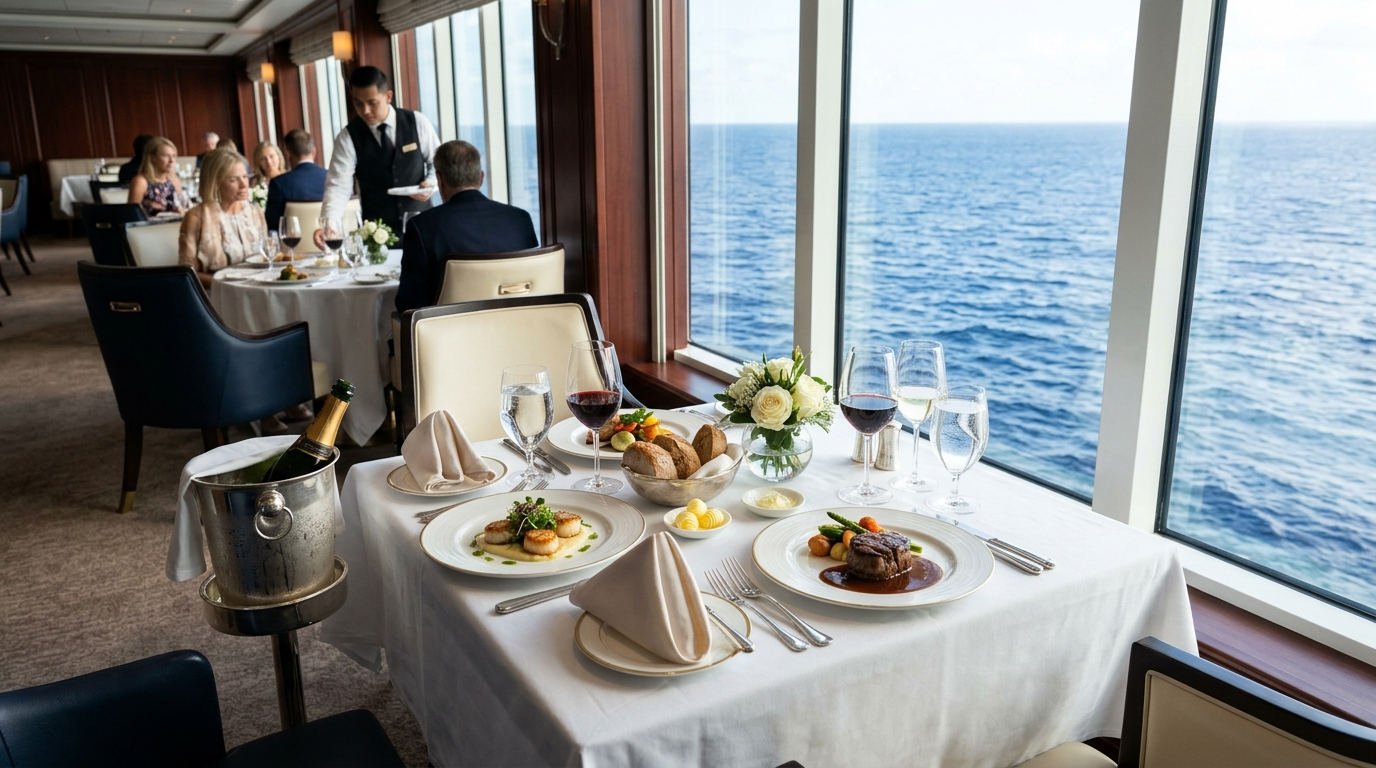
Traditional early or late dinner seating may be scheduled with theater times in mind, while flexible dining gives more freedom but can create waits at peak hours. If an important show begins at 8:00, leave time to finish dinner and walk to the venue. On a large ship, crossing from a far dining room to a theater can take longer than expected.
Check whether reservations for specialty restaurants and performances are made through the same app. A booking in one system may not warn you about a clash in another. Keep a personal schedule for anything you would be disappointed to miss, especially on sea days with many simultaneous activities.
If mobility or sensory considerations are relevant, contact staff about seating, entry routes, captioning or hearing support when offered, and any quiet alternatives. Do not assume that every venue provides identical access features.
Family nights and youth programs
Families may see outdoor films, character events, dance parties, talent shows, or supervised youth activities. Age requirements, registration processes, and pickup rules vary. A child enjoying the youth club may not want to sit through an hour-long theater performance, so flexibility can be a bigger advantage than an ambitious entertainment calendar.
Read what the program actually offers for the child's age band. Teen spaces and young-child sessions often operate differently. Some evening childcare or late sessions may have extra charges, limited capacity, or advance sign-up requirements. Parents remain responsible for understanding those terms.
For multigenerational groups, choose one shared event rather than expecting everyone to enjoy the same schedule. A short music performance before dinner can be a manageable common experience, after which different ages can pursue what interests them.
Nightlife without losing the next day
Bars, lounges, clubs, and deck parties can run well into the night on some ships. A busy event may be exactly what you booked, but it is worth thinking about tomorrow morning's port call. An early excursion after a late party can be tiring, especially in warm weather or with a long walk ahead.
Be mindful of alcohol, hydration, and the ship's rules for conduct and quiet hours. You may also encounter dress codes or venue-specific policies; check rather than arriving with an assumption from land-based clubs. The best evening for you might finish early with a comfortable sleep and sunrise on the balcony.
If you are sensitive to noise, inspect the deck plan before booking. Cabins above or below music venues or near busy corridors may experience disturbance. A quieter location is often more effective than hoping every party will end exactly when you want to sleep.
Enjoy the daytime program as well
Entertainment does not begin when the sun sets. Cooking demonstrations, enrichment talks, behind-the-scenes sessions, art activities, films, deck games, and live music may take place throughout the day. Their availability depends on ship type and itinerary. Expedition-oriented voyages, for instance, may emphasize destination lectures and interpretation rather than Broadway-style productions.
Sea days can reveal a ship's personality. Some vessels schedule almost continuous activities, while others encourage a slower rhythm. Compare the cruise with your own temperament. A traveler who values learning might prioritize lectures, libraries, and destination experts; another may want a variety of sports and informal games.
Allow yourself to discover something unexpected. Small performances and informal sessions can become favorite memories because they feel less choreographed than a headline event.
A realistic way to choose a ship for entertainment
Decide whether your priorities are theater, music, comedy, social games, family activities, or nightlife. Then examine that ship's actual facilities and a recent example program, remembering that schedules are subject to change. Ask whether reservations are needed, what is included, and how late the busiest venues operate.
Entertainment should enrich the holiday, not become a checklist. When you choose a ship whose range suits your taste and make room for spontaneous evenings, the experience tends to feel less like keeping appointments and more like being on vacation.
Choose a cabin with the evening soundscape in mind
If live music or parties are a highlight, staying near an entertainment district may be convenient. If you sleep early, the same location can be frustrating. Inspect the deck above and below your proposed cabin for theaters, lounges, pool parties and busy corridors. Sound travels differently through different vessels, so a particular cabin's location matters more than assumptions based on the ship's size.
When entertainment is central to your trip, avoid relying on one performer or a single advertised production. Programs can change because of weather, scheduling or operational issues. Select a ship offering several styles you enjoy, and the holiday will remain attractive even if one headline event is canceled.
Plan entertainment for the actual sailing
- Check which shows are available on your ship and whether reservations are required.
- Leave flexibility for repeated performances or changing schedules.
- Compare late-night entertainment with the likely fatigue of an early port excursion.