
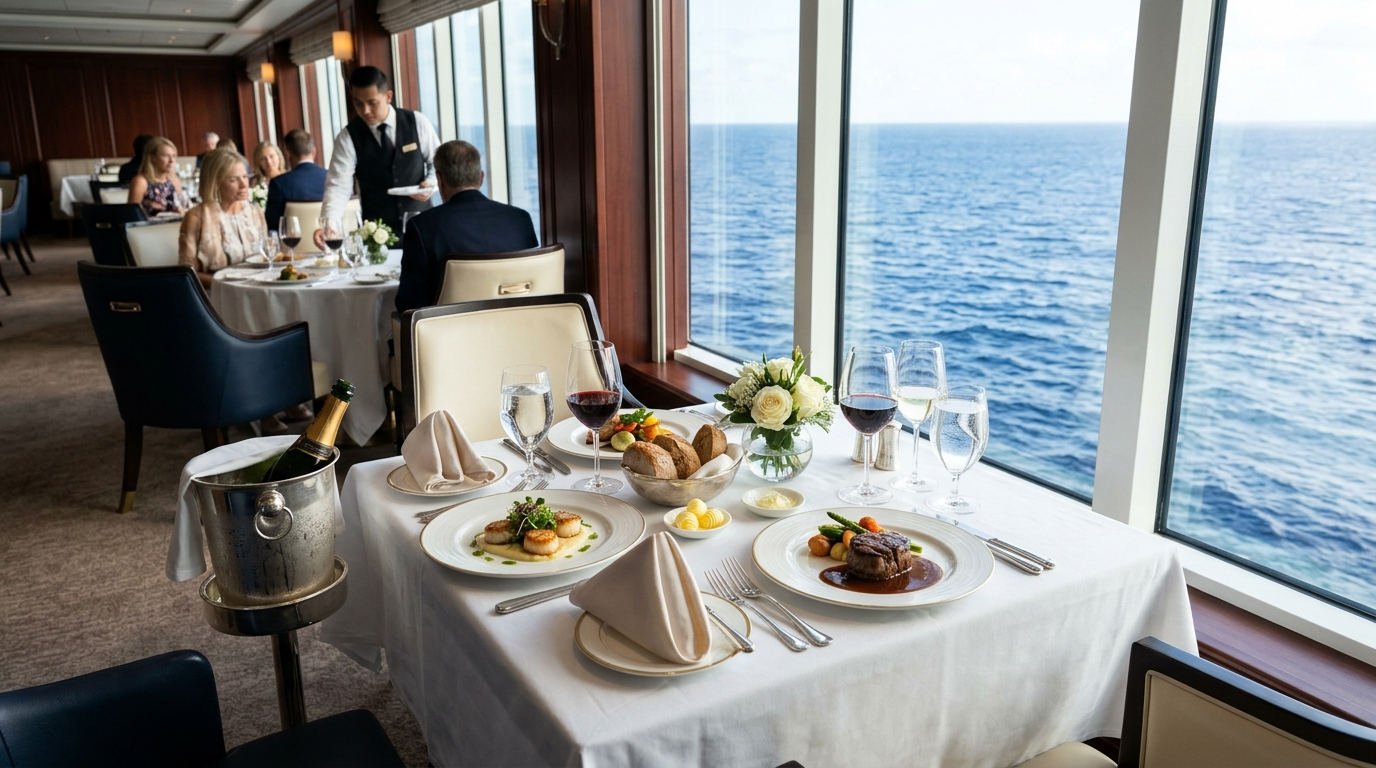
Dining aboard a cruise ship can range from a quick breakfast at a buffet to a leisurely multi-course dinner. The best option depends on your appetite, schedule, dietary needs, and the style of ship you have chosen. Understanding the basic venues and their rules helps you enjoy the food without unnecessary reservations, extra charges, or awkward surprises.
The main dining room: a familiar cruise tradition
The main dining room is typically a full-service restaurant with table service and menus that change through the voyage. Many cruise fares include meals there. Some ships use fixed seating times and assigned tables, while others offer flexible dining or a choice between the two systems.
Traditional seating can be pleasant if you enjoy a predictable routine and the same service team each evening. Flexible dining gives you room to adjust meals around port calls and entertainment. There may still be waits at peak hours, so check whether a reservation is advisable.
Dress codes vary. One line may emphasize casual attire while another hosts formal or themed evenings. Review the current policy for your ship rather than assuming a particular level of formality based on the restaurant's name.
Buffets are about flexibility, not just quantity
Buffets suit travelers who want to choose among different dishes, eat at their own pace, or accommodate different preferences within a group. Opening hours can change between sea days and port days. Certain stations may close even while the main venue remains open.
The busiest times often follow the ship's daily schedule. Breakfast before excursions and lunch on sea days can create queues. If you prefer a quieter meal, explore alternative included venues or visit outside peak periods where schedules allow.
The restaurant bill is clearer when you know how cruise ship gratuities work, especially how automatic charges differ from optional extras.
For food allergies, buffet labels and shared serving areas may not provide enough certainty. Ask the operator's food-service staff about its procedures and use designated assistance routes. Cross-contact can be relevant even when a dish's named ingredients appear suitable.
Casual counters and cafés fill the gaps
Many ships offer quick-service options such as sandwiches, pizza, snacks, or café meals. These can be practical after returning from port or between activities. Some are included in the fare while others charge for selected items, specialty drinks, or delivery.
Check the hours rather than assuming food is available everywhere at all times. A late-night venue may offer only a limited menu, and a branded café might charge for beverages even when some food is complimentary.
For families, reliable casual options can reduce stress when children become hungry outside a fixed dinner time. Travelers with early excursions may value a nearby grab-and-go breakfast more than an elaborate sit-down service.
Specialty restaurants: what the extra money buys
Specialty venues may focus on steak, seafood, regional cuisines, tasting menus, or intimate service. Some charge a fixed cover fee, while others use à la carte prices or dining packages. On premium ships, some specialty venues may already be included.
Read the pricing structure. A package can exclude particular premium dishes or limit visit times. Reservations are often popular on sea days, so book important meals early, especially if celebrating an occasion.
A higher price does not automatically mean a better experience for every diner. If you enjoy the included main dining room, there is no obligation to buy multiple upgrades. A single specialty dinner can be a memorable treat without taking over the budget.
Room service and private dining
Room service is convenient for early starts, late evenings, or a quiet meal in the cabin. Policies vary: continental breakfast may be handled differently from hot meals, and delivery fees or service charges may apply. Check the menu and current prices before ordering.
A balcony breakfast can sound idyllic, but wind and weather may affect comfort. Cabin layouts also differ; a compact inside room may have limited dining space. Decide whether the convenience suits the actual room you have booked.
Guests with medical or mobility needs may find room service useful, but it should not be assumed to replace every dining accommodation. Verify access to suitable meals and any assistance requirements in advance.
Dietary needs require direct communication
Cruise kitchens frequently handle a variety of dietary requests, but capabilities differ by operator and venue. Notify the line of significant allergies or restrictions through its designated process before traveling, and confirm arrangements with relevant onboard staff.
Gluten-free, vegetarian, vegan, or religious dietary options may be offered in different ways. A label or menu symbol is helpful but does not necessarily address cross-contact or ingredient-specific allergies. Never rely on assumptions when a mistake could be serious.
If an excursion includes a meal or a private island stop, check those food services separately. They may not use the same kitchen or procedures as the ship's main restaurant.
Dining with children and larger groups
Groups often need more planning than couples. Fixed seating can keep everyone together, but it may be too early or late for young children. Flexible dining supports varied schedules, though obtaining a large table at a popular time can require a reservation.
Children's menus, high chairs, and age-appropriate food are common on many ships but not identical across fleets. Confirm what's available on the particular vessel. Guests sharing meals with multiple families may appreciate a routine of certain dinners together and other evenings spent separately.
If celebrating a birthday or milestone, ask the restaurant about any special arrangements and charges. Not every surprise can be accommodated on the same day, particularly when custom dietary requests are involved.
Dining around port schedules
A long port visit may have you returning after ordinary lunch hours. Learn which casual venues remain open and whether room service is available. On a shore day, a local restaurant can be part of the destination experience rather than treating every meal as something to eat aboard.
For early departures, a breakfast venue close to your cabin may be convenient. During scenic cruising, an ocean-facing restaurant offers a lovely setting, but do not sacrifice the chance to see the landscape from an open or panoramic deck if that is your priority.
Some ships schedule special dining evenings during sea days. Check the daily program and reserve accordingly. Avoid stacking dinners and major shows so tightly that you spend the evening watching the clock.
Food quality is personal; service rules are concrete
Reviews can reveal patterns, but taste preferences differ. One guest may love a buffet's variety while another prefers a small menu served attentively. Look for specific information on temperature, wait times, dietary handling, and restaurant consistency instead of relying only on rankings.
Before boarding, identify the included dining venues, booking rules, and any likely charges. Once aboard, try the options that fit your appetite and daily rhythm. Cruise dining is most enjoyable when it offers freedom, not pressure to eat everywhere merely because the ship has many restaurants.
Plan meals without treating the ship like a checklist
The main dining room often provides a slower service with courses and seated tables, while buffets suit passengers who want flexibility or a quick meal before an excursion. Specialty restaurants may offer different cuisines or more intimate surroundings, sometimes for an added charge. There is no universal hierarchy. A well-run casual venue may be more enjoyable after a tiring port day than a long reservation dinner.
Investigate dining times early. Some lines offer traditional assigned seating, others flexible systems, and some a combination. Larger groups may find a fixed dinner slot convenient, but people who return late from excursions may prefer less structure. If you want specialty dining, check how far in advance reservations open and whether cancellation charges apply. A popular restaurant may not have a convenient slot if you leave it until boarding.
Dietary needs require more than scanning a printed menu. Passengers with food allergies or medically necessary diets should contact the operator before sailing and confirm arrangements with staff onboard. Ingredients, kitchens and cross-contact procedures vary. A dish that is vegetarian or gluten-free by description is not necessarily appropriate for every medical requirement.
Finally, avoid paying for extras simply because they are promoted as special. Consider what food is already included and whether an additional restaurant suits your interests. For families, the ability to eat early or choose familiar dishes can be more valuable than culinary novelty. A good dining plan gives you satisfying choices without making every meal another scheduled event.
The small details that make meals more pleasant
If you prefer calm meals, try dining outside the busiest rush where the ship's schedule allows. Families can ask about early seating or shorter-service options, while passengers with mobility needs may benefit from a table near an accessible entrance. A window table can be lovely, but do not treat it as the only worthwhile way to enjoy dinner.
If you purchase a dining package, check whether it covers cover charges, individual menu items, gratuities or reservations in every restaurant advertised. Consider how many evenings you will be ashore or tired after excursions before committing. Leaving some meals unplanned can be one of the most relaxing decisions of the trip.
Work out which meals cost extra
- Check which dining rooms and casual venues are included on your ship.
- Understand whether specialty reservations, room service or drinks carry charges.
- Notify the line about dietary restrictions early and ask about cross-contact procedures.


