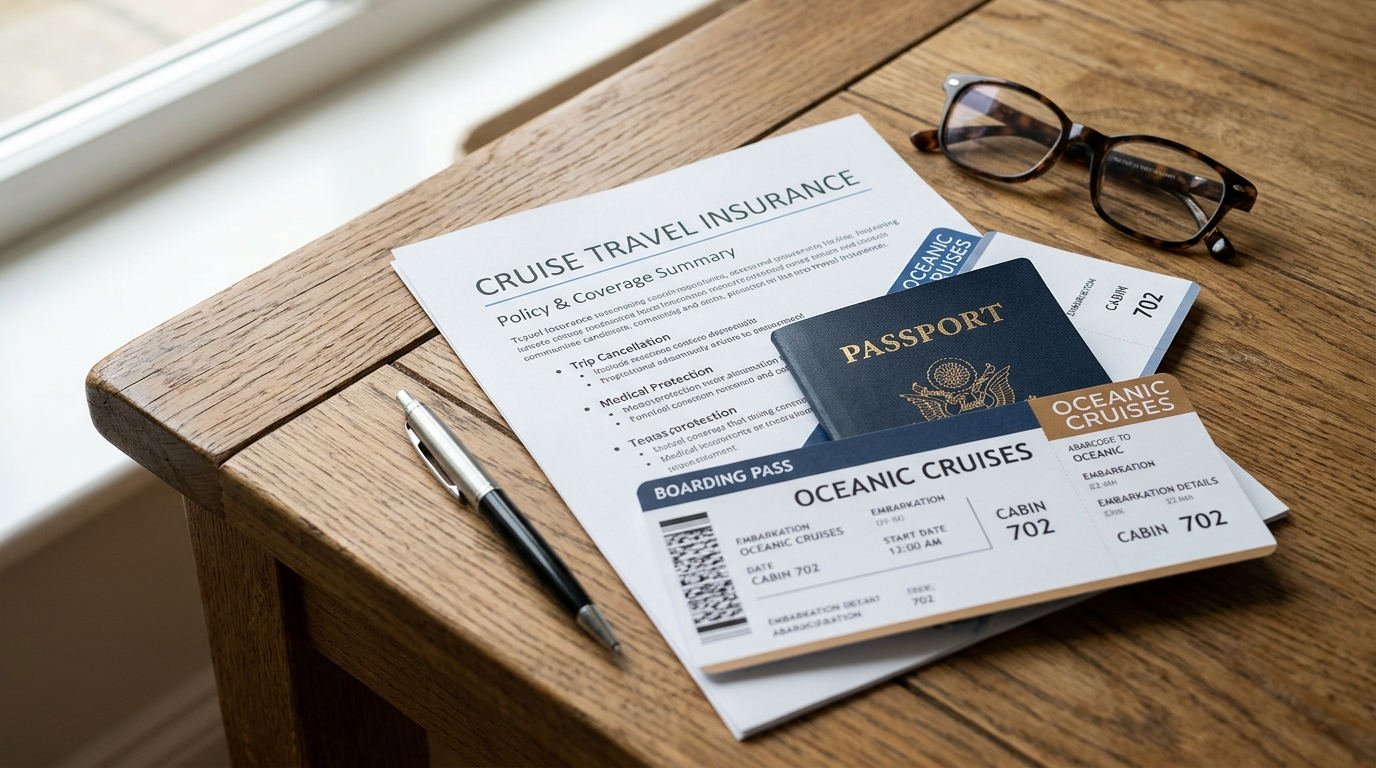

There is no reliable date on the calendar when every cruise becomes cheapest. Fares respond to demand, cabin inventory, departure season, promotions, and the operator's pricing strategy. Booking early may protect your choice of room and sailing; waiting can occasionally produce a bargain but removes certainty. The smartest timing depends on what you need to control.
Start with how flexible your trip really is
If you can sail in several months, depart from different ports, and accept a range of cabin locations, you may benefit from comparing fares over time. If you need a particular school-holiday week, an accessible cabin, connecting rooms, or a specific family configuration, waiting can be risky. There may be only a few rooms that meet your requirements.
List what cannot change: travel dates, number of guests, cabin type, departure city, accessibility features, or an important itinerary. Treat everything else as negotiable. The more nonnegotiable details you have, the more valuable early booking becomes even if a later fare looks lower on paper.
Travelers celebrating a milestone may also place a premium on certainty. A rare anniversary voyage or a special group gathering is different from an interchangeable short break. The cost of missing the desired sailing should be part of the decision.
Why early booking can be sensible
Booking far enough ahead generally gives you more cabin inventory to compare. That matters for location: you can avoid being under a busy pool deck, choose adjoining rooms, or reserve a particular balcony configuration. It also allows more time to arrange flights, visas where applicable, and complex shore excursions.
Early fares are not automatically the lowest. Some operators release promotions later, and advertised packages can change. The advantage is having options and the opportunity to plan carefully. On popular itineraries or limited-capacity ships, desirable rooms may disappear before a discounted fare arrives.
Price timing is easier to judge when you also know the checks involved in finding genuine cruise deals.
Check the deposit structure and cancellation policy. A refundable booking under specific terms may offer flexibility, but refund conditions differ by line, fare, and country of sale. Do not assume you can cancel or reprice without a penalty simply because departure is months away.
The last-minute bargain: what it costs in choices
Occasionally, operators discount remaining cabins close to sailing to improve occupancy. This can work for a traveler who lives near the departure port, can take time off with little notice, and does not require a specific stateroom. It is less useful when flights are expensive, accommodation is scarce, or documents are not ready.
Late availability may consist of locations you would not have selected earlier. A guarantee fare might assign a cabin after booking rather than letting you choose the room number. That can be acceptable when the savings are significant and your needs are flexible; it is a poor strategy for travelers who need precise access features or quiet accommodation.
A discounted cruise can be canceled out by expensive last-minute airfare, hotel rates, or transfers. Compare the total door-to-door trip before celebrating a low ship fare. Also check final-payment requirements, since late bookings may require the entire price immediately.
Seasonal demand is more useful than a magic day
Demand often rises around school breaks, major holidays, and desirable local travel seasons. A summer family voyage, a warm-weather winter escape, and a specialty seasonal itinerary can each follow different patterns. Shoulder-season departures may sometimes offer stronger value, but they can also involve less predictable weather or reduced activity schedules.
Choose the climate you actually want. An inexpensive cruise in a period of higher weather risk may still be worthwhile if you value price and flexibility, but it should not be treated as equivalent to a peak-season itinerary with different conditions. Read historical climate patterns and the operator's route carefully.
If you can move by even a week or two, compare several adjacent departure dates. Fares may change substantially around holiday transitions or when similar ships have different inventory. The cheapest date may not have the best port times or cabin choice.
Promotions need a careful comparison
Cruise promotions can include reduced deposits, onboard credit, beverage packages, prepaid service charges, or discounts for additional guests. These benefits are not interchangeable. A drink package has little value to someone who rarely purchases eligible beverages; a reduced deposit does not mean the overall fare is cheaper.
Calculate the total of the same cabin category with the features you will use. Look at taxes and port expenses, the single supplement if traveling alone, the cost for third and fourth guests, and any package conditions. Some offers require particular fare types that have stricter cancellation terms.
Keep screenshots or copies of the exact offer and conditions, including whether a cabin number is guaranteed. Pricing may change after the promotion ends, and remembering only the headline discount is not enough for a fair comparison.
Repricing is possible in some cases, not a right
Travelers sometimes discover a lower advertised fare after booking. Whether they can benefit depends on the cruise line, booking terms, payment status, agency rules, and availability in the same category. Some price adjustments may involve losing an existing promotion or changing to a more restrictive fare.
Contact the seller and ask for a complete comparison, including perks and cancellation terms. A lower base price may not be better if you must give up valuable onboard credit or prepaid inclusions. Do not cancel an existing booking before confirming that the replacement is genuinely available and advantageous.
Record important deadlines, particularly final payment and cancellation stages. These dates may determine whether a price change is possible without additional cost. If you used a travel advisor, confirm who is authorized to make changes and whether service fees apply.
Cabin choice sometimes outweighs the savings
Two balcony cabins on the same ship can have different views, privacy, noise exposure, and walking distances. For a guest with mobility limitations or a family with young children, location may be critical. The apparent savings from a late deal can disappear if the only remaining cabin is unsuitable.
Look at the deck plans above and below the room. Identify nearby elevators, service areas, and late-night venues. Check whether a discounted cabin has an obstructed view or unusual bed configuration. A specific room you know will work may be worth a modest premium.
Accessible cabins often represent especially limited inventory. Reserve and confirm the exact facilities early. Waiting for a general price drop can risk losing access to the accommodation needed for the entire journey.
A practical booking timeline
Begin comparing itineraries once you know your approximate dates and travel party. Research the route, ship, cabin categories, and total estimated cost. Set a price range you are comfortable paying and identify which room locations are acceptable. Then book when the combination meets your needs rather than betting on an unseen future discount.
After booking, keep track of payment and document deadlines. If the fare conditions permit adjustments, monitoring comparable offers can be worthwhile, but not at the expense of clear planning. Reserve hard-to-get excursions only once the cruise is confirmed, and consider the flexibility of each booking.
The best time to book is when the sailing, cabin, terms, and complete cost make sense together. A small saving is rarely worth losing the one cabin or itinerary that would make the vacation work.
Watch the details that change the value of a deal
Fare changes can create anxiety, especially when the price of a sailing moves after you have paid a deposit. Before booking, find out whether your fare allows repricing, whether a new promotion can be applied, and what cancellation penalties would apply at each stage. Rules vary by operator, market and booking type; a lower advertised rate does not necessarily mean that you can switch to it without cost.
Cabin availability is a different kind of value. If you need connecting rooms, an accessible cabin, a particular location, or space for several people, waiting for a discount may leave fewer suitable options. A solo passenger interested in the limited number of studios may face a similar constraint. Travelers with flexible dates and few cabin requirements have more freedom to compare last-minute offers.
Consider the total trip expense. Peak holiday flights, hotels near the port and local transfers can become costly even when the cruise fare falls. A sailing that looks inexpensive at the last minute might require expensive transportation or inconvenient arrival times. Include at least the practical travel buffer you need before departure, particularly when flying internationally.
A sensible booking strategy starts with the fare you can comfortably afford and a sailing that fits your priorities. Set a realistic budget, track a small number of acceptable alternatives, and read the exact conditions before placing the deposit. Chasing the absolute lowest figure can result in worse cabin choice or more restrictive terms, which are meaningful costs even when they do not appear on the headline price.
A low fare is not always a low-risk purchase
If the departure is distant, consider the chance that your circumstances will change before final payment. A deeply discounted nonrefundable offer may work for someone with firm plans, but it may be less appealing when health, school dates or work schedules are uncertain. Read the terms and consider suitable cancellation protection rather than interpreting every discount as free savings.
Booking early is especially sensible when your requirements are narrow. A family needing connecting cabins or a traveler requiring a specific accessible layout has fewer interchangeable options. Flexibility creates opportunities to wait; specific needs often make choice more valuable than a speculative price reduction.
Know what waiting could cost you
- Flag any non-negotiable cabin needs such as adjoining rooms or an accessible layout.
- Compare the price of a refundable rate with the risk of a nonrefundable deposit.
- Track total travel costs, not cruise fare alone, when choosing your booking date.