
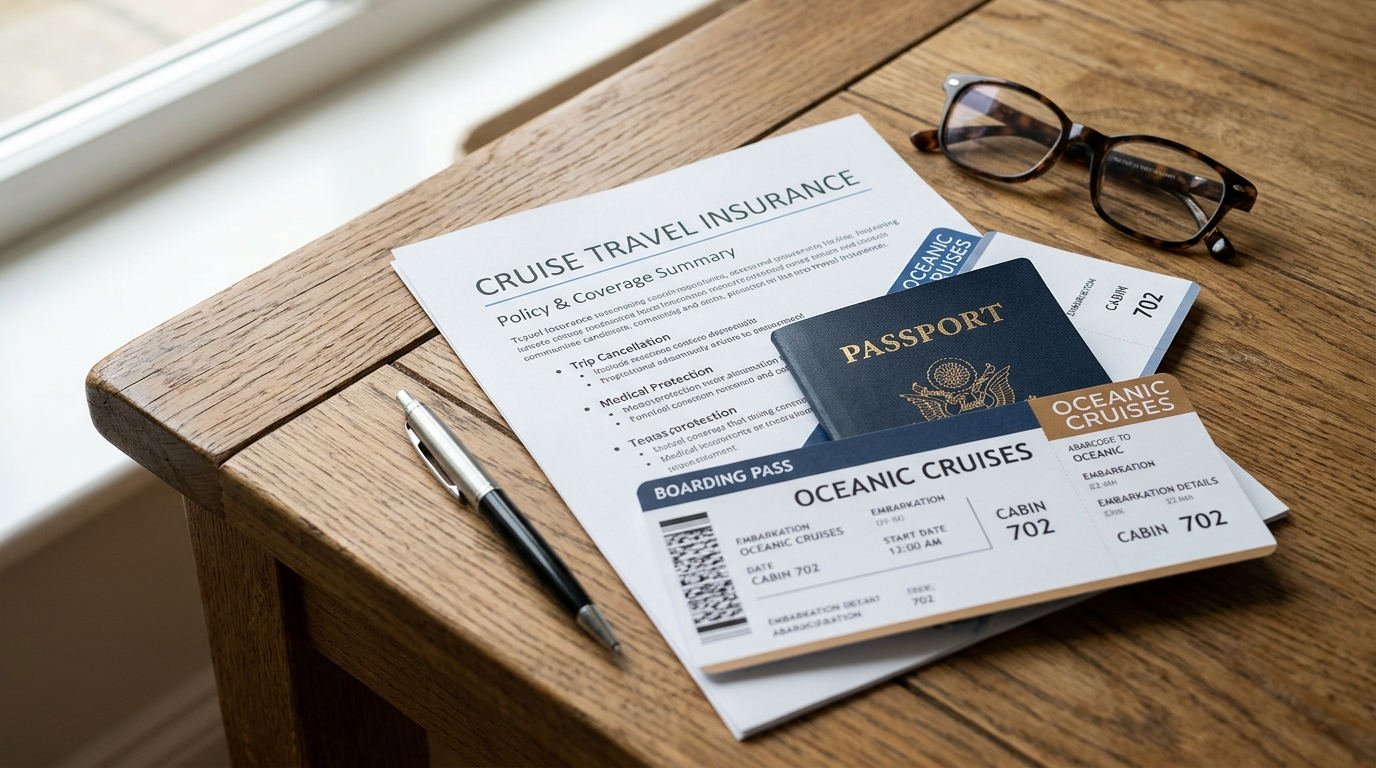
A cruise combines flights or ground travel, a moving ship, international ports, medical care at sea, and a fixed departure schedule. That creates risks that ordinary travel assumptions do not always cover. Cruise insurance can help with certain financial losses, but only when the policy's definitions, limits, and exclusions match the situation. Buying a policy without reading those details can create false reassurance.
Understand the three different problems
Travel cancellation concerns expenses you may lose before leaving home. Interruption concerns a trip that must be cut short or changed after it begins. Medical cover concerns illness or injury while traveling, potentially including treatment aboard a ship or ashore. Policies may bundle these protections or provide them at very different levels.
A policy described as “cruise insurance” is not automatically broader than a conventional travel policy, and a policy sold by a cruise company may not cover every expense related to the trip. Compare benefits line by line rather than relying on the product name.
Start with the cost you could not comfortably absorb: nonrefundable cruise payments, flights, hotels, medical bills, evacuation, and the expense of returning home unexpectedly. Then look for coverage that addresses those risks within the policy terms.
Medical treatment at sea can be costly
Cruise ships commonly have medical centers, but services vary and do not replace a full hospital. Treatment may be charged to the onboard account, and some health plans provide limited coverage outside a home country or on a foreign-registered ship. Check your existing insurance rather than assuming domestic benefits follow you abroad.
Evaluate medical expense limits, deductibles, exclusions, and any restrictions involving pre-existing conditions. If you take regular medication or manage a significant health condition, discuss travel suitability and supplies with a qualified clinician before departure.
Insurance is only one budget line; the full cost of a cruise helps account for other charges that appear after the headline fare.
Emergency care may involve leaving the ship in another country. Hospital costs, translation, ground transport, and return travel can create substantial expenses. Make sure you understand whether the insurer pays providers directly, requires reimbursement claims, or operates an assistance hotline.
Evacuation is not one simple benefit
Medical evacuation can involve transport from a ship to shore, transfer to a hospital, or repatriation to another country. A policy may distinguish between transport to the nearest appropriate facility and transport to a facility of your choice. Those are not interchangeable promises.
Read who authorizes an evacuation, what conditions trigger coverage, and whether the insurer arranges it. In remote areas, weather and available services may affect what is physically possible, regardless of policy wording.
Expedition and remote-destination cruises deserve special attention. The distance from advanced care and the use of specialized transport may exceed assumptions built into a basic travel plan. Confirm that the region and activities are not excluded.
Cancellation: a covered reason is what matters
Standard cancellation benefits normally apply to specified events, which may include certain illnesses or other circumstances defined in the contract. Changing your mind, discovering a lower fare, or deciding the weather looks unpleasant usually does not create a covered claim unless a specific optional benefit applies.
Review when coverage begins, whether deposits are included, and what evidence is required. Some benefits involving pre-existing medical conditions or optional cancellation flexibility have purchase deadlines or eligibility conditions tied to the initial trip payment.
Do not cancel a booking based on an assumption that a claim will be paid. Contact the insurer, understand the documentation requirements, and review the cruise line's own cancellation terms. The insurer may only consider the amount that is nonrefundable under those terms.
Missed departures and travel delays
A flight delay can be more serious on a cruise than on a resort holiday because the ship departs on a fixed schedule. Missing embarkation may require expensive transport to a later port, and such a plan may not always be allowed or feasible due to immigration or cruise-line rules.
Check whether the policy covers missed connections, travel delays, necessary accommodation, and the cost of joining the trip later. Look for minimum delay periods, covered causes, and monetary caps. Not every late arrival qualifies, and proof from airlines or transport providers may be required.
A practical prevention measure is arriving in the departure city before embarkation day when possible. Insurance is a financial tool, not a substitute for giving yourself a realistic travel buffer.
Weather and itinerary changes need careful reading
Cruise routes can change because of storms, port restrictions, mechanical issues, or other operational factors. Coverage for a missed port or itinerary alteration varies and may be absent from many policies. Some products provide limited benefits for specifically defined cruise changes.
Do not assume that disappointment over a missed destination is an insured financial loss. Review the cruise operator's contract as well; ports are commonly subject to change. Purchase a voyage you would enjoy overall rather than one where a single stop determines the trip's value.
If a travel disruption occurs, keep written records of the reason, original and revised schedules, additional expenses, and any refunds received. Insurers commonly need proof of actual financial loss and may not reimburse costs already returned by a supplier.
Activities and exclusions are easy to overlook
Certain adventure activities, high-altitude excursions, diving, or specialist expedition experiences may carry restrictions. Even when an activity is sold through the cruise line, the insurance policy may have separate definitions of covered risk. Read them before committing to expensive excursions.
Alcohol-related exclusions, hazardous-activity clauses, and policy limits can affect claims. Coverage may also depend on where you travel and whether particular destinations are excluded. Review current travel advisories and insurer conditions before departure.
Pre-existing conditions require special care. Do not hide relevant information in a medical questionnaire. If uncertain whether a condition must be disclosed or whether a waiver applies, ask the insurer and obtain a written explanation of the policy.
Compare policies using realistic scenarios
Imagine a medical emergency requiring hospitalization abroad, a flight cancellation that causes you to miss the ship, and a personal illness that prevents departure. For each policy, ask whether the event is covered, the maximum benefit, the deductible, the process to claim, and relevant exclusions.
Compare independent policies with any travel protection offered through the cruise seller. A cruise-line plan can be convenient, but may have different coverage boundaries or provide future cruise credit instead of cash for certain benefits. Make sure the type of compensation meets your needs.
Keep emergency contact numbers available offline and share the policy details with a trusted companion. During a genuine emergency, contact local medical services first, then follow the insurer's assistance process as practical.
The best coverage is understood before it is needed
Record your travel dates, destination countries, nonrefundable expenses, and planned activities before choosing protection. Read the certificate or full wording, not only the product-summary table. If a term is unclear, ask the insurer to explain its application in writing.
Insurance cannot guarantee a safe voyage or reimburse every disappointment. Its value lies in covering defined financial risks that would otherwise be difficult to manage. Understanding those definitions is part of responsible cruise planning, not an optional detail after booking.
Work through three situations before buying
First imagine that a traveler becomes sick before departure and cannot sail. The relevant question is not whether a policy says it covers cancellations in general, but which reasons are covered, when the illness began, what evidence is needed and whether any exclusions apply. Some benefits depend on buying insurance soon after booking. Others require specific conditions to be met. Read the policy wording rather than relying on a short sales summary.
Next imagine the ship changes its itinerary because of weather. A missed port may be disappointing, but not every travel policy pays compensation for an altered schedule. Some forms of disruption cover focus on delays, missed departures or specified transport expenses. Examine what triggers payment and what does not. The cruise contract and the insurance contract serve different purposes and should not be confused.
Finally consider a medical emergency at sea. The ship's clinic may be able to assess and stabilize some conditions, but a serious problem could require transfer or evacuation. Ordinary domestic health coverage may not apply in the same way offshore or abroad. Check emergency medical limits, evacuation benefits, the assistance number and whether pre-existing conditions affect eligibility. A medical history that seems irrelevant at booking can become important during a claim.
Once insured, save the certificate, full policy wording and emergency contact details somewhere accessible without Wi-Fi. Tell a traveling companion where to find them. Receipts, medical reports, and written confirmation of delays may matter when filing a claim. Insurance is most useful when you know what you bought before something goes wrong.
Know the boundary between help and reimbursement
A travel-assistance phone number can help you understand what to do during an emergency, but assistance does not necessarily mean every expense will be paid immediately. Some providers arrange services, some reimburse eligible claims later, and policy wording controls what is covered. You may be asked for receipts, medical records or approval before certain arrangements are made.
When comparing policies, note deductibles or excess amounts, per-person coverage limits, exclusions for certain activities, and any special requirements for remote excursions. A policy suited to a gentle coastal cruise might differ from one needed for an expedition with challenging landings. Keep the emergency number offline and ensure that traveling companions know who to call if you cannot communicate yourself.
Read these insurance exclusions closely
- Find the medical evacuation and repatriation terms, not just the headline coverage limit.
- Check what counts as a covered cancellation or missed port, and any excess or waiting period.
- Declare relevant existing conditions and confirm every planned destination and activity is covered.