
A cruise deal should improve the vacation you want to take, not persuade you to book an unsuitable sailing. Discounts, onboard credits, extra-guest promotions, and bundled packages can all be useful, but the fine print decides whether the offer is genuinely better. The goal is to compare equivalent travel experiences and understand the compromises behind the price.
Identify the exact fare being advertised
“From” prices usually describe a particular cabin, occupancy, and sailing date. They may not represent the dates or accommodation that work for you. Before comparing offers, select the actual number of guests, departure date, ship, and cabin category. The difference can be considerable, especially during popular travel periods.
Look for taxes and port expenses in the displayed total. Some promotions have separate service charges or mandatory payments. A fair comparison uses the full amount due, not only the headline fare before additional charges appear during checkout.
The cabin assignment also matters. A guaranteed category may save money but let the cruise line choose your room later. That uncertainty is acceptable for some travelers, yet less attractive when noise, mobility, connecting rooms, or view restrictions are important.
Watch for promotions that shift costs around
A fare with drinks included may be higher than a basic fare even though it is advertised as a free-package offer. Onboard credit can be useful but may be restricted to particular purchases or expire at the end of the voyage. Reduced deposits can improve short-term cash flow without reducing the overall trip price.
Read the exact terms for every benefit. Check whether gratuities or taxes apply to a beverage package and whether all guests in the cabin must enroll. “Kids sail free” promotions may still involve fees and may apply only to selected room categories or occupancy arrangements.
Flexibility is part of the deal, and when to book for better cabin choice explains why waiting can carry an availability cost.
Calculate the value to you. If you rarely drink alcohol, an advertised beverage benefit may be worth little. If you were already planning several specialty dinners, a legitimate dining inclusion could be useful. Avoid assigning full retail value to extras you would never have purchased.
Compare the trip from your front door
An appealing discount can disappear when you add flights, a pre-cruise hotel, transfers, parking, and luggage charges. A nearby departure port may offer better overall value even when the cruise fare is slightly higher. For international routes, consider document costs and any required visas as well.
Late deals are particularly sensitive to transport. A discounted cabin booked a few weeks before sailing may be offset by expensive flights or limited hotel availability. If the ship departs from a distant city, calculate the complete trip before purchasing a fare that looks time-sensitive.
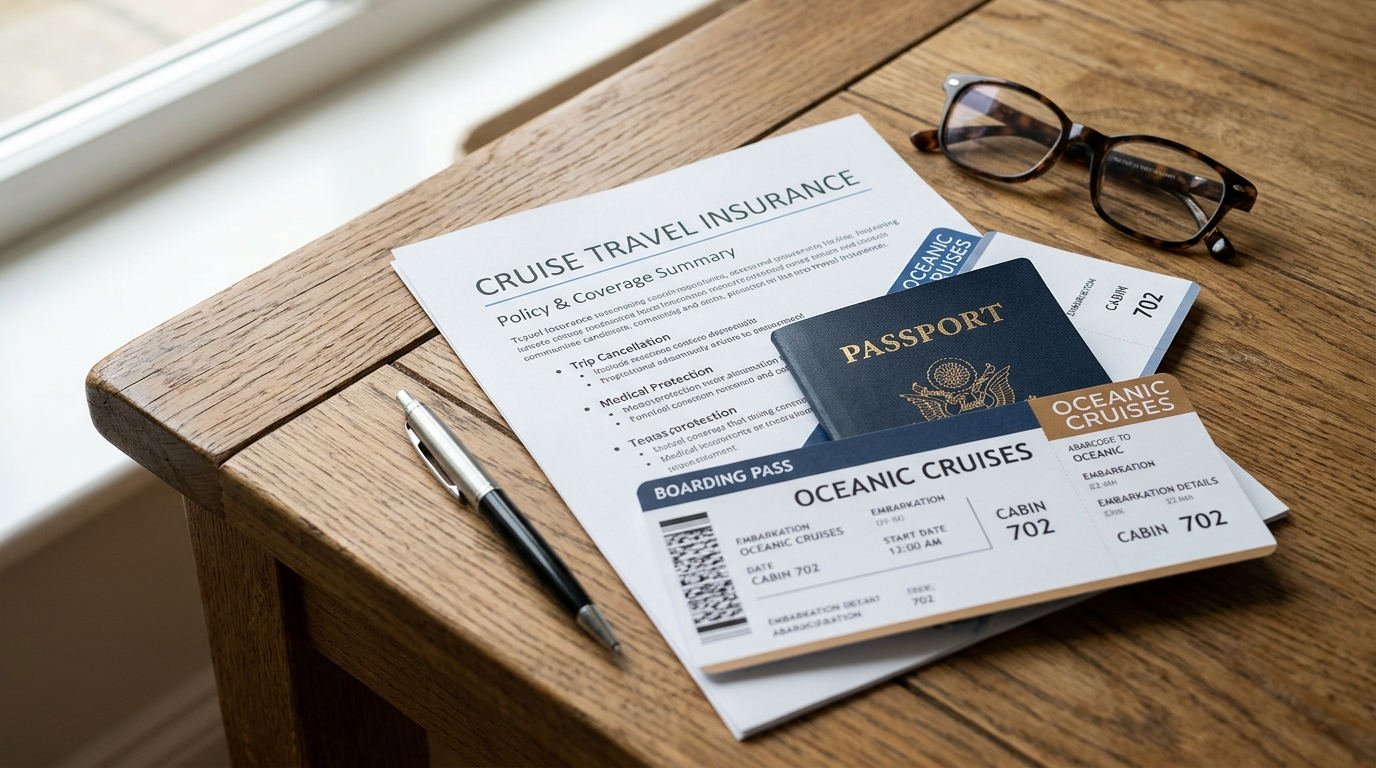
Travel insurance belongs in the comparison where relevant. Review coverage for cancellation, interruptions, medical treatment, and evacuation rather than assuming that a basic policy covers every cruise-related risk.
The cheapest sailing may have a different itinerary
Two seven-night cruises can feel unlike each other. One may call at several ports with long stays; another may offer fewer useful hours ashore or more time at sea. A less expensive route can be ideal for someone who loves onboard activities, but poor value for a traveler primarily interested in destinations.
Read the port schedule and any tender arrangements. Some advertised city names refer to harbors well outside the attractions people intend to visit. Transfer time and excursion costs may turn a seemingly attractive itinerary into a stressful or expensive journey.
Seasonal conditions matter too. Lower prices can reflect different weather, shorter daylight hours, or reduced regional demand. These do not automatically make the trip undesirable, but the difference should be understood rather than hidden under the word “deal.”
Cabin quality is part of the value equation
A room under a busy pool deck or beside late-night entertainment can be a poor bargain for someone who needs quiet. An obstructed-view balcony may be fine if you primarily want fresh air, and disappointing if the panorama matters most. Read the official deck plan before accepting a discounted room.
For families, the configuration of third and fourth beds can matter more than the room label. A cabin sold for four may use bunks or a sofa bed that reduce usable space. For accessible travel, specific door and bathroom features should be confirmed directly and never sacrificed for a promotion.
Sometimes paying a modest amount more for a better location is the genuinely better deal. Evaluate your savings against the practical comfort you may be giving up for every night of the trip.
Understand the terms that survive after checkout
Cancellation penalties, final-payment dates, and deposit rules vary. A promotional fare can be more restrictive than a standard rate. Read what happens if you need to move dates, change passenger names, or cancel because of a personal circumstance.
Some offers cannot be combined with loyalty benefits or future price reductions. Onboard credit may be nonrefundable and usable only for certain services. Ask for the complete terms in writing when the booking depends on a specific perk.
If a new lower fare appears after booking, the line may or may not permit a price adjustment. Restrictions can depend on fare type, payment date, and agency agreements. Compare the full package before changing an existing reservation; losing valuable inclusions may cancel out a lower ticket price.
Use reviews to verify value, not to choose blindly
Recent, ship-specific accounts can reveal whether an older vessel is comfortable, whether entertainment is varied, or whether queues become frustrating at meal times. But one person's bargain may be another person's disappointment. Prioritize reviews that explain circumstances rather than broad praise or complaints.
Look at the ship's actual facilities, not simply the brand. A cruise line may advertise waterslides and multiple restaurants on its newest ships, while your discounted sailing uses a vessel with a very different layout.
If the deal involves a specialty theme or an unusually long route, investigate the daily schedule. A low fare on a transoceanic voyage may be attractive only if you enjoy multiple consecutive sea days.
A five-minute deal audit
Before paying, record the exact sailing date, ship, room category and number, total mandatory price, cancellation conditions, and benefits included. Add your likely onboard extras and travel-to-port cost. Compare the result with at least one alternative that satisfies the same core needs.
Ask what would disappoint you if the price were no longer impressive. If you would still like the ship, route, and cabin, the offer deserves consideration. If the only attraction is the discount percentage, you may be buying someone else's ideal vacation.
A good cruise deal makes the desired experience more affordable while leaving the important details intact. The strongest bargain is one you understand well enough that the final bill and daily routine contain few surprises.
A deal comparison is only fair when the conditions match
Two prices for the same vessel may represent different products. One could apply to an interior guarantee cabin, while another includes a chosen balcony room with more flexible cancellation terms. A promotion might require a nonrefundable deposit, a particular payment method, or a package purchase. Before comparing totals, put the cabin category, passenger count, sailing date and inclusions side by side.
Watch for language about onboard credit. It may be useful for drinks, excursions or other purchases, but the allowed uses and expiry conditions matter. Credit is not identical to cash, and unused balances may not be returned. Similarly, a free-drinks headline could refer to selected drinks only and might exclude service charges, premium items or usage outside particular venues.
Some of the best opportunities come from flexibility rather than a secret discount. If several departure dates suit you, compare them alongside flight and hotel prices. A slightly more expensive sailing from a convenient port can be better value than a cheap fare that requires complicated travel. Off-peak dates might be attractive, but consider local weather, daylight and seasonal closures before booking solely for the rate.
Keep screenshots or copies of the offer's terms before paying. Verify the final invoice line by line and confirm that any promotional credit or included package appears on the reservation. A genuine deal should remain appealing after every required charge is visible. If important conditions are unclear, ask for them in writing instead of relying on urgency language or an expiring countdown.
Beware of comparing a cabin guarantee with a selected room
A guaranteed-category cabin can save money because the operator assigns the exact location later. That tradeoff may suit a flexible traveler, but it can be uncomfortable for someone who needs a particular deck, nearby companion cabins or a quieter corridor. Read whether the guarantee applies to the broad category or a more specific subtype, and ask what changes are permitted after assignment.
For accessible accommodation, do not assume a guarantee will produce a suitable room. Confirm the correct cabin features and booking process directly. A discount that removes a necessary feature is not a bargain. The best deal preserves the experience you are actually willing and able to take.
Test whether an offer is genuinely cheaper
- Compare the final total for identical dates, cabin occupancy and fare conditions.
- Check whether onboard credit can be used for the expenses you actually intend to buy.
- Read refund, deposit and repricing rules before a promotion ends.