
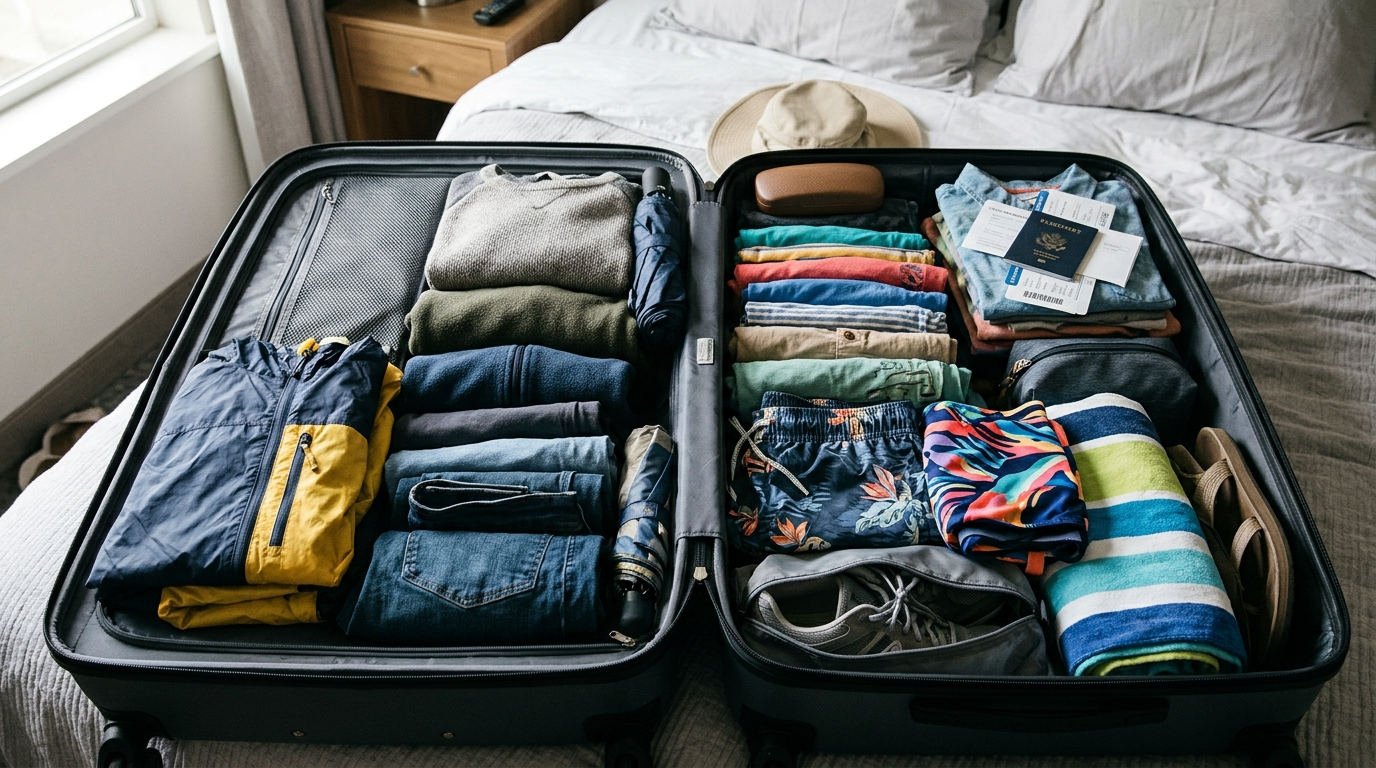
Packing for a cruise is an exercise in preparing for several environments with limited luggage. The departure city may be hot, the sea breeze cold, the dining room air-conditioned, and a shore excursion unexpectedly wet. The solution is not to pack an outfit for every possibility. Build a flexible system of layers, comfortable shoes, and a few essential items that cannot easily be replaced aboard.
Read the route, not just the destination label
A Caribbean itinerary suggests warm-weather clothing, but rain, strong sun, and cooler evenings may still feature. Alaska and northern Europe require insulating layers and waterproof outerwear even when traveling during summer. Mediterranean port days can involve exposed heat and long walks, followed by cooler conditions on open decks.
Look at the expected weather for each region and the time of year, not only the temperature at embarkation. Consider the kind of excursions you plan: beach days, city walking, mountain viewpoints, boat trips, or formal evenings. What you actually do ashore matters more than trying to match every item in a generic packing list.
The vessel adds a climate of its own. Air conditioning can make indoor spaces feel cool, and wind can make an outdoor deck chilly while the air temperature remains pleasant. A light sweater or jacket is often useful even on a tropical voyage.
Build clothing around layers
Choose comfortable base layers that can be worn under a warmer mid-layer and a weather-resistant outer shell. This lets you respond to changing conditions without carrying multiple bulky outfits. For colder routes, moisture management and wind protection matter more than the number of heavy sweaters in your suitcase.
Pack items that coordinate so you can repeat combinations without feeling as though you are wearing the same outfit every day. Neutral bottoms with several tops often work well. On longer trips, check whether the ship offers laundry or self-service washing, and what those services cost.
Preparing for the first day is easier when you understand cruise embarkation documents and check-in and which essentials belong in a carry-on.
Avoid overpacking evening clothes until you have checked the actual cruise line's dress policy. Some vessels are casual throughout; others schedule themed or more formal evenings. A versatile dinner outfit may cover several settings without requiring shoes and accessories for every night.
Shoes deserve the most deliberate choice
Comfortable walking shoes are essential for most itineraries. Port visits can involve cobbled streets, slopes, wet boardwalks, or uneven trails. New shoes that have not been worn in may create blisters at the worst possible moment.
For pool and beach areas, pack appropriate sandals or water footwear if needed. On colder or wetter routes, shoes with good grip and weather resistance are often more useful than fashionable but slippery soles. Check any excursion-specific requirements before choosing footwear.
You do not need an entire footwear collection. One reliable walking pair, suitable casual shoes or sandals, and any genuinely necessary special-purpose footwear will serve most travelers better than multiple barely used alternatives.
Put the essentials in a carry-on
Checked luggage may be delivered to the cabin after embarkation rather than immediately. Keep travel documents, medications, glasses, essential electronics, valuables, and a change of basic clothing in the bag you retain. If you want to use the pool soon after boarding, include suitable swimwear in that bag.
Carry prescription medicine in its appropriate packaging and enough supply to account for delays, following applicable travel requirements. Check destination rules for controlled medication or specialized medical equipment well before departure. Do not assume every medicine is available from the ship's medical center.
Important documents deserve redundancy. Keep required originals secure, and store copies of booking confirmations and insurance details where you can access them offline. A phone battery failure should not leave you without essential information.
Protect yourself from sun and rain
Sun exposure can be strong at sea, including in cooler regions. Sunscreen, sunglasses, a hat, and appropriate protective clothing are practical rather than optional beach accessories. A reusable water bottle where permitted can make staying hydrated easier on shore excursions.
A compact rain shell is more useful than a flimsy umbrella when the wind picks up on an exposed deck. In warm regions, lightweight breathable fabric helps when brief showers arrive. In cold regions, a waterproof shell over insulating layers provides adaptable protection.
Consider a small waterproof pouch for electronics and documents when visiting beaches or using small boats. A daypack allows you to carry layers, water, and essentials without returning to the ship between activities.
Electronics: check policies before buying accessories
Cabin outlets and USB ports vary by ship and age. Bring suitable chargers and adapters where needed, but review the cruise line's rules on extension cords, power strips, irons, kettles, and other appliances. Items that are allowed in hotels may be prohibited aboard because of fire-safety policies.
An external battery pack can help on long port days, provided it complies with relevant travel and airline rules. Download maps, tickets, and important addresses for offline use because cellular coverage and ship Wi-Fi may be inconsistent or costly.
If you intend to use a phone for photographs, consider extra storage. If bringing a camera, a protective case and cleaning cloth may be worthwhile near spray or sand. Avoid packing expensive gear that you do not realistically expect to use.
Personal care and comfort items
Pack everyday toiletries, but check which basics the ship provides. A small supply of preferred items can be valuable when port shopping is limited. Include any mobility aids, assistive devices, and essential supplies that are difficult to replace abroad.
If you are susceptible to motion sickness, discuss appropriate preventive options with a healthcare professional before sailing. Not every remedy is suitable for everyone, and some medicines cause drowsiness. Carry prescriptions and instructions rather than relying on onboard availability.
Consider the cabin environment: earplugs, a sleep mask, or a small organizer may improve comfort, provided they are permitted and practical. An inside cabin can be very dark, while daylight and corridor noise may affect other rooms.
Match special equipment to the excursion
A snorkeling tour, cold-weather Zodiac ride, hiking excursion, or formal event may require items that an ordinary cruise does not. Read the actual excursion equipment list. Some providers supply boots, life jackets, or specialist gear; others expect travelers to bring their own.
For children, verify swim aids and life-jacket policies. A child's favorite equipment may not meet operator rules. For travelers with accessibility needs, plan batteries, chargers, replacement components, and equipment transport with the cruise line well in advance.
Don't forget the practical limits of flight baggage allowance when the cruise begins far from home. One bulky item may be inexpensive to carry onto a car-to-port departure but costly or impractical on a regional flight.
Use a final packing audit
Group items into documents and health, everyday clothes, weather layers, footwear, electronics, and excursion-specific gear. Remove anything that serves no clear purpose, then confirm the few things that would be hard to replace: documents, medicine, appropriate shoes, and essential equipment.
A well-packed cruise suitcase is not the fullest one. It is the one that lets you move confidently between a sunny deck, a rainy shore visit, and a cool evening dining room without repeatedly buying things you left at home.
Think in outfits that survive a change of conditions
A warm-weather voyage can still have chilly indoor spaces, windy upper decks and rain during a shore visit. Instead of packing only for the destination's average temperature, build layered combinations. A breathable base, light insulating layer and packable rain protection may be useful across several settings. For northern routes, a more substantial waterproof and wind-resistant outer layer can matter more than a collection of dressy outfits.
Shoes deserve disproportionate attention. One comfortable walking pair, suitable poolside footwear and a dress option if you need it may cover most situations. Check whether excursions require closed-toe shoes or specific traction. New shoes that look ideal in the suitcase can cause blisters during a long port day. Wear and test walking footwear before departure.
A cruise's dress guidance varies by line and venue. Some ships have formal evenings; others emphasize resort casual clothing. Check the actual policy before packing outfits you may never use. Also consider laundry facilities or services, particularly on longer voyages. Repeating versatile garments is often easier than hauling a different complete outfit for every day.
Keep important documents, medications, essential toiletries and one change of clothes in your carry-on. Checked luggage may reach the cabin later than you do. If your itinerary changes climate zones, separate clothing into easy-to-access packing groups. A careful packing plan aims for preparedness without leaving you with a heavy suitcase full of items that never leave the wardrobe.
Pack for the ship as well as the shore
Indoor dining rooms, theaters and observation lounges can feel cooler than tropical outdoor decks, so a light layer is useful even on a warm itinerary. For cooler routes, gloves and a warm hat can make scenic viewing more pleasant than an extra dress outfit. Sunglasses and sun protection can matter even when the sky is cloudy and the air is brisk.
Check the cruise line's rules on prohibited items, luggage limits and cabin electrical equipment. Some everyday household devices cannot be brought onboard, and rules are not identical across operators. Avoid packing a power strip or appliance simply because a traveler online recommended it. Verify the current policy before departure.
Pack for the ship and the ports separately
- Review each destination’s seasonal climate and your planned outdoor activities.
- Bring layers for breezy decks even if the daytime port forecast is warm.
- Keep prescriptions, glasses, charging gear and essential documents in a carry-on.