
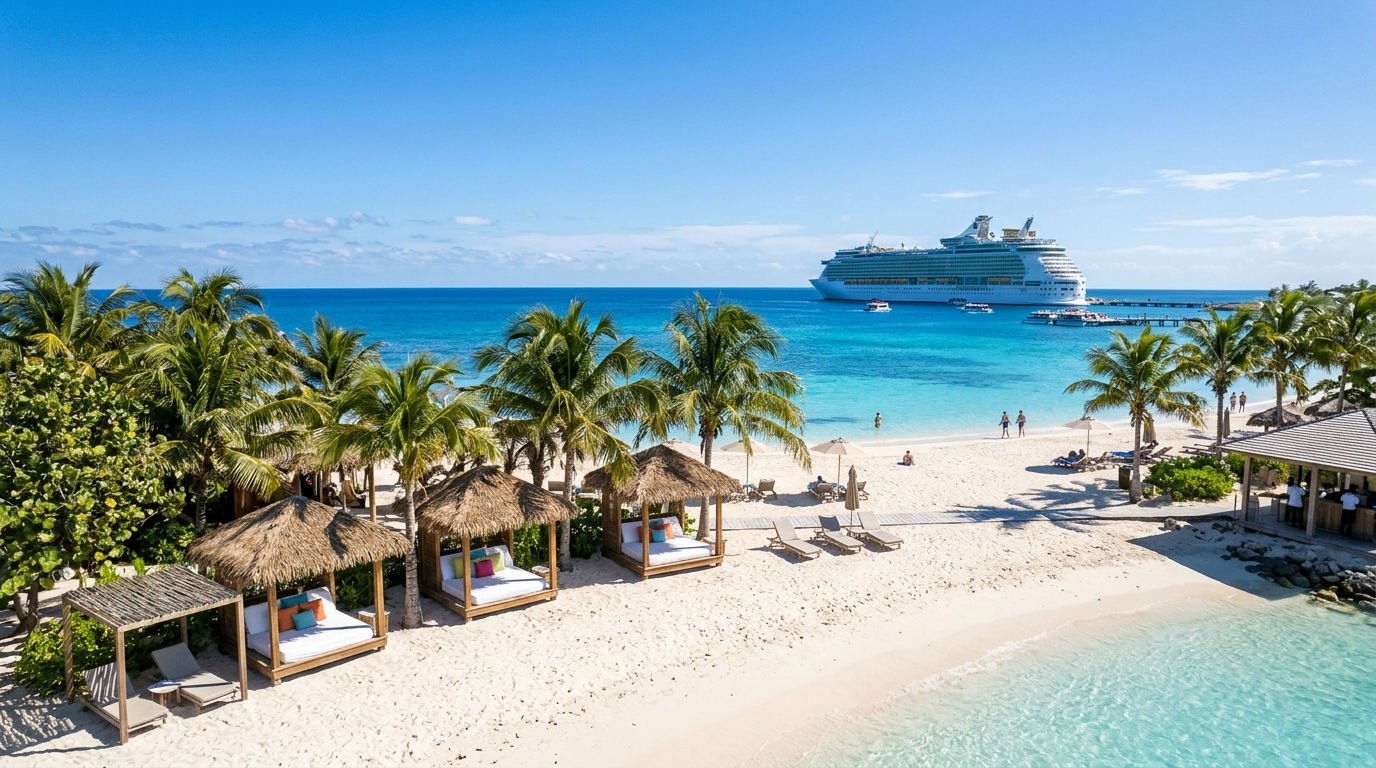
Private cruise islands and beach destinations can make a port day feel unusually straightforward: leave the ship, find a beach, and enjoy facilities designed around the arrival of cruise guests. But the term “private island” does not guarantee that everything is included or that every visitor has the same experience. Understand access, prices, transport, and onshore logistics before treating the day as free resort time.
What makes a destination “private”?
Cruise operators may own, lease, or manage designated islands or beach areas. Some destinations are dedicated predominantly to their guests; others are portions of larger inhabited islands or resorts. The exact legal and operating arrangement varies, so do not assume every private stop is an isolated island closed to the wider world.
For passengers, the practical difference is that facilities, activities, and shore transport are often integrated with the cruise line's operation. Wayfinding can be easier, and there may be designated dining, restrooms, beaches, trams, or recreational areas. That convenience is a major part of the appeal.
A private destination remains an outdoor environment, however. Weather, sea conditions, and wildlife are not controlled like a hotel lobby. Activities may close, beach conditions may change, and the ship may alter the call when safety requires it.
Understand what's included before going ashore
Some destinations include basic beach access, lounge chairs in designated areas, and meals at selected venues. Others charge for certain equipment, premium beach zones, cabanas, waterparks, snorkeling excursions, or upgraded dining. Even where basic meals are covered, alcoholic drinks and specialty beverages may follow separate package rules.
Read the current destination guide and your fare's inclusions. If you have a beverage package, verify whether it applies ashore and to which venues. Do not assume that a package valid on the ship covers every beach bar or private facility.
Private beach days make more sense as part of choosing Caribbean island stops, where destination variety can shape the whole week.
Costs can add up for a family. A waterpark day, rental equipment, private seating, and specialty excursions may exceed the price of a simple port visit. Decide on one or two paid experiences you genuinely want, rather than reserving every activity in advance.
Beach areas suit different guests
A family beach may have easy access to snacks and play facilities, while a quieter zone may appeal to couples seeking relaxation. Some operators offer premium adults-only retreats or secluded cabana areas for an extra charge. Layouts differ, and a beach described as peaceful may be busy when multiple ships call.
Inspect the map for walking distances, shade, restroom locations, and transport options. If a member of your party has limited mobility, confirm the availability and route of accessible trams, pathways, beach wheelchairs, and suitable restrooms. Sand itself can be a significant barrier.
Arriving early may provide more choice of ordinary lounge chairs, but there is no need to turn a relaxing day into a race. Choose a beach zone suited to your priorities and allow time to settle. Shade and hydration are important even if the itinerary is designed for effortless leisure.
Getting from the ship to the sand
Some private stops have a pier where guests walk directly ashore. Others require tenders or a separate transport process. Direct docking is often simpler, but the walk from the ship to the main beach can still be lengthy. Trams or shuttles may help, depending on the destination.
Tender operations depend on weather and local conditions. Boarding may involve steps or vessel movement, which matters for travelers with mobility requirements. Ask the operator about the specific private stop rather than assuming standardized access across all destinations in a fleet.
Keep track of the return-to-ship deadline. It is easy to lose time when relaxing far from the pier, especially if several transport stages are involved. Leave room for queues and any last-minute equipment return procedures.
Activities beyond the lounge chair
Waterparks, zip lines, guided water sports, snorkeling, paddleboarding, and boat excursions may be available at certain private destinations. Check age, height, swimming ability, health, and weight restrictions for each activity. A purchased admission may not include every attraction or every experience within a complex.
If snorkeling, protect marine habitats by following local rules and avoiding contact with coral or wildlife. Weather and water conditions can affect visibility and safety. A private destination is not a guarantee of calm seas or suitable swimming for every guest.
Families with younger children should plan supervision and rest breaks. Big attractions can be exciting but exhausting in tropical heat. A quiet beach, a meal, and one age-appropriate activity may create a happier day than a packed schedule.
Food, drinks and practical amenities
Find out whether the destination uses buffet service, snack counters, or paid restaurants, and what hours they operate. Travelers with dietary restrictions should verify available options in advance. The ship's kitchen may accommodate certain needs that are more difficult to meet at a smaller outdoor venue.
Ask whether onboard payment cards work ashore and whether cash or a separate method is needed for certain purchases. If renting a locker, cabana, or equipment, know the rules for deposits and returning items. Do not assume every facility has ample storage or secure places for valuables.
Sunscreen, a hat, refillable water bottle where permitted, and a light cover-up belong in the day bag. Pack essential medications and avoid leaving travel documents unattended. The organized environment makes the day simpler, but ordinary travel precautions still apply.
How the visit compares with a traditional port
A private beach day can offer predictable logistics, an easy route back to the ship, and recreation without research-intensive planning. That is especially attractive for first-time cruisers and families. It can also provide welcome downtime between demanding sightseeing ports.
On the other hand, private destinations may offer fewer opportunities to experience local history, independent businesses, and everyday island life. The facilities are often curated primarily for cruise passengers. A route that contains several such stops may feel resort-focused rather than culturally varied.
Neither style is better. If your priority is relaxation, an organized beach stop may be ideal. If you hope to explore local communities, choose itineraries with traditional ports and adequate time ashore as well.
Book only what will improve your day
Start with the included beach experience and decide whether you need more. A cabana might offer comfort for a multigenerational group that values shade and a fixed meeting point; it may be unnecessary for two guests who plan to swim and walk. A premium area can be lovely but less appealing if most of your group wants water activities elsewhere.
Check cancellation terms on add-ons, especially when weather can disrupt the port. Reserve popular experiences early if they are truly essential, but avoid converting a free day into an expensive schedule filled with appointments.
The charm of a private destination is the freedom to enjoy the shore without constant logistics. Understand the extras, pick the beach that fits your group, and keep enough flexibility for the simplest pleasure of all: a few hours by the water.
Check the real price of a supposedly simple beach day
Private cruise destinations are often advertised as easy, all-in-one places to relax. Yet the included experience may be a basic beach area with certain food options, while waterparks, premium seating, cabanas, watersports or specialized dining cost extra. Review the current list of inclusions for your exact sailing, since operators and locations differ. A familiar brand name is not a guarantee of identical facilities.
Transportation can be convenient, but not every destination has a direct pier. Some use tenders, trams, or internal shuttles. Consider how far beach areas are from the ship, where accessible toilets are located, and whether shade is available without a premium reservation. Parents with young children may care more about a manageable walk and calm water than about an expensive attraction package.
The day also has environmental implications. Use marked paths, follow instructions for reef or wildlife protection, and avoid taking natural objects as souvenirs where prohibited. A purpose-built destination is still part of a real coastal environment, and conditions such as surf, wind, heat and marine life require attention. Lifeguard arrangements and swimming boundaries should be checked rather than assumed.
If your goal is to learn about local life, a private beach stop may feel different from visiting an independent town or port. That is not necessarily a disadvantage; it can be a comfortable rest day between more demanding excursions. Compare your full itinerary as a whole so that the number of resort-style calls matches your interests instead of replacing cultural exploration you hoped to have.
Don't assume every beach area is equivalent
Some areas may be designated for families, quiet relaxation or premium-access guests. A picturesque location on an official map might require a shuttle or extra fee. Find out which beach spaces are included, how crowded they may become, and what facilities are nearby. On a sunny day, dependable shade and toilets can be more valuable than proximity to a headline attraction.
Beach wheelchairs, tram access and accessible pathways vary by destination and may require advance arrangements. Verify the facilities for your needs before relying on the advertising. An enjoyable shore day is one where the basics work comfortably, without unexpected logistical obstacles after you disembark.
Price a private-island day accurately
- Separate included beach access, food and trams from paid cabanas or waterpark activities.
- Ask whether your drinks package works at that private destination.
- Check accessibility, shade and transport options before prepaying upgrades.


