
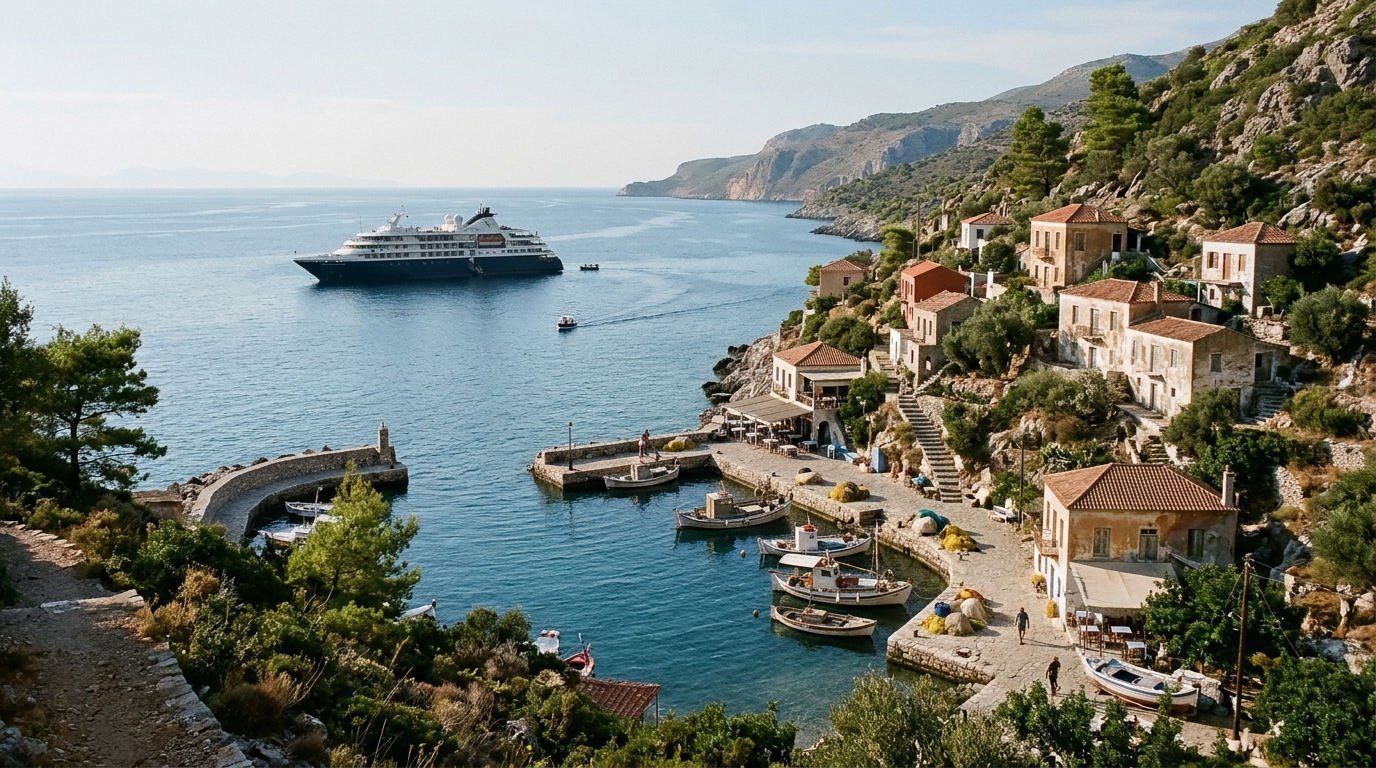
Smaller cruise ports can offer the pleasure of arriving somewhere that feels like a working town rather than a major tourism hub. But access is complicated: a vessel's length, draft, tender facilities, local regulations, and infrastructure all affect whether it can visit. Smaller ports are not always less crowded, and a small ship is not an automatic ticket to solitude.
Why some harbors cannot accept large ships
A cruise ship needs suitable water depth, turning room, berthing space, and safe navigation. In ports with limited infrastructure, a vessel may be too long for the quay or too deep for the channel. Bridges, narrow passages, tidal conditions, and local operating rules can create additional restrictions.
Some ships anchor offshore and use tenders to bring passengers ashore. This can make destinations accessible without a large berth, but only when sea conditions, local landing facilities, and regulations allow. Tender operations can take time and may be canceled for safety.
The presence of a small ship does not necessarily mean permission is automatic. Local authorities may limit visitor numbers, restrict anchoring areas, or impose environmental conditions. Check the operator's current itinerary and avoid assuming a vessel can always revisit a harbor it used previously.
What smaller-ship itineraries can offer
Ships carrying fewer guests may be able to operate in certain harbors or waterways that are impractical for very large vessels. This opens the possibility of regional towns, remote coastlines, and specialized destination programs. Some boutique and expedition lines build their itineraries around this kind of access.
A call at a small harbor can put passengers close to local streets, independent cafés, or coastal walks. There may be less need for a large excursion operation, and the sense of place can be strong. Yet the benefits depend on the actual town and the length of the call.
The geography and port conditions described in planning a Norwegian fjord cruise show why smaller harbors are not always simple to visit.
Port-intensive small-ship cruises may offer less elaborate onboard entertainment than large resort ships. That tradeoff can be worthwhile for destination-focused travelers, but it should be made deliberately. A simple ship with excellent port access is not ideal for someone whose favorite part of cruising is a large theater or waterpark.
Why a small port can still feel crowded
A town with a modest population may experience a large relative increase in visitors when even one cruise ship arrives. Narrow streets, a single waterfront market, or limited bus capacity can become busy. Land-based day-trippers and regional tourism add to the pressure.
The number of people ashore also depends on disembarkation patterns. If most guests leave the ship within the same hour, a small center may feel congested, then quiet down later. A longer call can spread visits across the day, allowing more relaxed exploration.
Look for places beyond the single most photographed viewpoint. A neighborhood walk, local museum, or small guided experience may reveal more than following every passenger toward the same attraction. Respect residential areas and avoid trespassing in search of uncrowded scenery.
Understand the logistics of a tender arrival
Tendering can be a useful way to reach a small harbor without a dedicated cruise berth, but it changes the timetable. Passengers may need to collect tickets, wait for boarding groups, and use steps or platforms between vessel and boat. The transfer itself can be scenic, yet it consumes part of the advertised port time.
Guests with mobility requirements should verify tender accessibility on the actual ship. Safe boarding depends on equipment and daily conditions, and some operators impose restrictions for certain devices. Do not assume that a tender-accessible itinerary is appropriate for every passenger.
Allow a significant return buffer. A visit to a remote coastal village is less enjoyable when you must rush back over uncertain roads to catch the last tender. Prioritize activities close to shore if the port window is short.
Choosing independent exploration or a tour
One attraction of smaller ports is the possibility of discovering them on foot. Check walking distances, pavement conditions, gradients, and whether shops or museums open during your visit. Some charming villages have limited public transport and few taxis; that can make the setting peaceful but reduce options for travelers who cannot walk far.
A local guide may add historical and cultural context that would otherwise be easy to miss. If taking a tour, ask about group size, transport, exact stops, and how locally rooted the experience is. A bus convoy to a distant viewpoint can undermine the quiet atmosphere you hoped to find.
Independent visits offer flexibility, but they require responsibility. Research the departure point, payment options, and safe return route. Where mobile coverage is unreliable, keep essential details available offline.
Environmental and community considerations
Small coastal communities may have limited waste systems, fragile paths, and infrastructure designed for residents rather than visitor surges. Follow signage, keep to established trails, and respect photography and property rules. Avoid encouraging wildlife interactions that disturb animals or damage habitat.
Consider how your spending reaches the local economy. A meal at a locally operated café, a small museum admission, or a carefully chosen guide can be more meaningful than buying generic souvenirs. However, local businesses may have limited capacity, so patience and flexibility are important.
Environmental policies can affect ship operations, especially in protected landscapes. Rules may evolve, and itineraries can change as operators adapt. Responsible planning means treating such requirements as part of protecting the destination, not merely as inconveniences to travelers.
How to identify a genuinely interesting route
Do not look only for obscure port names. Ask why each stop is included and what you can actually experience there. A smaller port with six useful hours and easy access to local culture may be more rewarding than an isolated landing with little time ashore.
Compare the number of tender calls, the distances to major sights, and the likely availability of transport. Some small harbors offer relaxed independent walks; others require prearranged excursions. Read reviews that describe specific visits rather than promoting the vague promise of “hidden gems.”
Consider the ship's onboard atmosphere as well. A voyage with frequent small ports and little sea-day entertainment can be excellent for curious travelers who like early starts and local exploration. Guests looking for extensive recreation may prefer a different balance.
A better definition of escaping crowds
The most successful smaller-port cruise is one that gives you meaningful access, sufficient time, and a respectful relationship with the place. Solitude may still be elusive, especially in a celebrated coastal village. But a well-chosen itinerary can replace hurried mass-tourism stops with a more measured experience of local streets, landscapes, and people.
Look for operational details, not romantic labels. A smaller ship, a long port call, straightforward shore access, and a destination you genuinely want to explore together create the strongest case for choosing the road—or waterway—less traveled.
Understand the difference between quiet and convenient
A small port may seem more peaceful than a major cruise terminal, but it can have limited docking space, transport capacity and public facilities. If a ship anchors offshore, passengers may be carried in tenders. This process takes time and can be affected by sea conditions, making the usable time ashore shorter than the published port call suggests. A quiet harbor is not always a simple one to visit.
Infrastructure matters. A remote coastal village may offer striking landscapes and local character but few taxis or tour options for hundreds of arriving guests. Booking transport ahead can help, yet it also adds rigidity. Learn whether the destination is comfortably walkable from the landing point and whether cafés, toilets and pathways are accessible at the hours of your visit.
Smaller vessels sometimes have more flexibility, but their size is only one part of the equation. Depth, quay length, local regulations, environmental protections and permission to land all matter. Expedition ships may use specialized boats or guided group landings under strict rules rather than a conventional downtown pier. Be wary of marketing claims suggesting that a small ship can reach everywhere a larger one cannot.
To enjoy a smaller port responsibly, slow down. A short walk, a conversation at a local business and an unhurried view of the harbor may be more rewarding than a packed tour schedule. Respect residents' privacy and any access restrictions, especially in areas with fragile natural habitats. Less crowded travel works best when visitors also impose less pressure on the places they visit.
The way locals experience a cruise arrival
A town of a few thousand people may suddenly receive a large number of visitors when one vessel calls. Even if the ship is smaller than a mainstream liner, traffic, shops and walking routes can feel busy for a few hours. Quiet travel is therefore partly about timing and behavior, not merely choosing an obscure destination.
If you find a local guide or small business, consider whether your spending supports people based in that community. Stay on marked paths, keep entrances clear and follow posted rules for cultural or natural sites. A short visit cannot provide deep knowledge of a place, but it can still be thoughtful. Leaving room for ordinary life to continue is as important as seeking uncrowded views for yourself.
Check what a smaller port requires
- Find whether your vessel docks alongside or passengers reach shore by tender.
- Compare excursion capacity with independent transport and local opening hours.
- Build in time for weather changes, accessibility needs and the return to the ship.


